
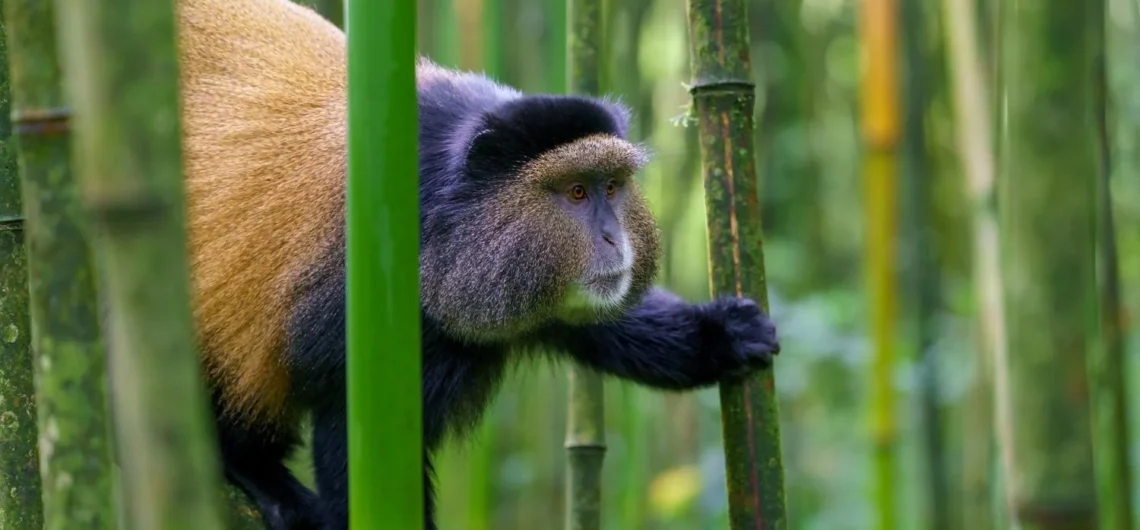
Imagine pushing through thick bamboo in Rwanda’s mist-covered mountains, when a sudden flash of orange fur catches your eye. There they are—golden monkeys in Rwanda, leaping effortlessly from branch to branch, their bright coats glowing like sunlight against rain-soaked leaves. Their playful chatter and boundless energy draw you into a magical forest world.
Golden monkeys, scientifically known as Cercopithecus mitis kandti, are among the rarest primates on Earth. Golden monkeys in Rwanda are found in the high-altitude bamboo forests of Volcanoes National Park, part of the greater Virunga Mountains shared with Uganda and the Democratic Republic of Congo. This guide explores how to plan an unforgettable golden monkey trekking experience in Rwanda, highlights their remarkable recovery from near extinction, and introduces the unique ecosystem they call home.
The Majesty of the Golden Monkey: Species Spotlight
Identification and Biology
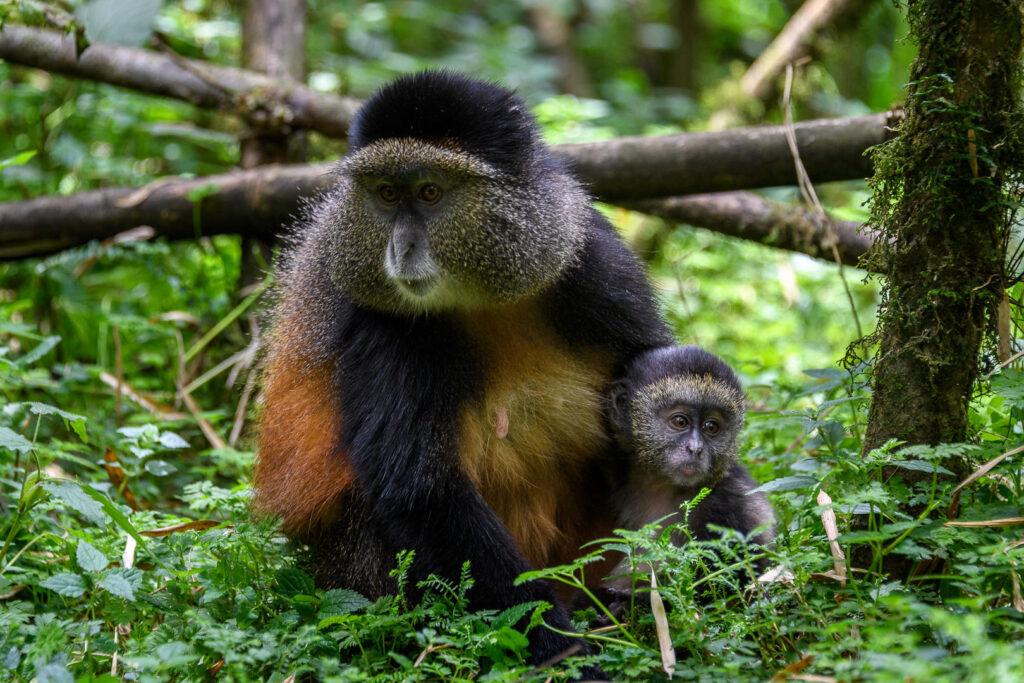
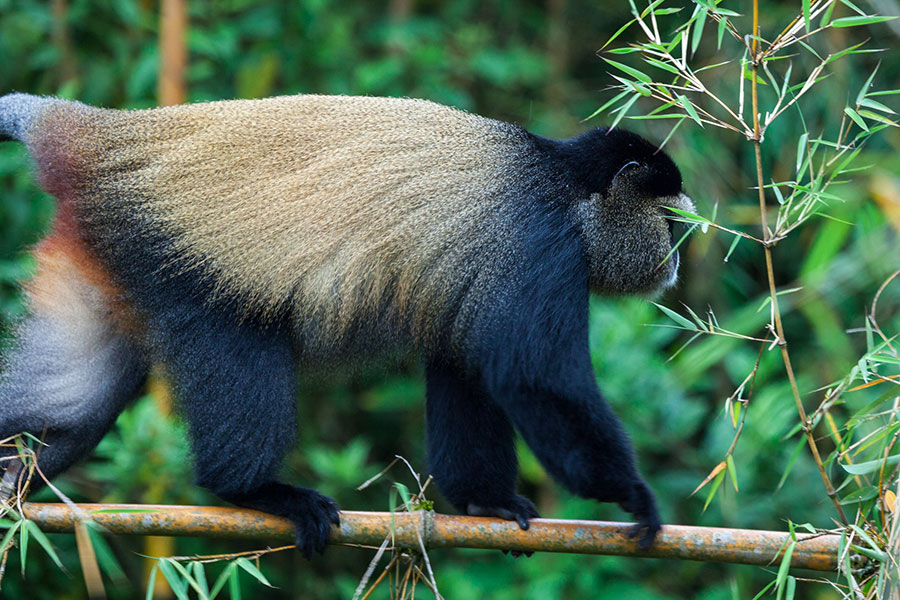
Golden monkeys stand out with their golden-brown backs and black crowns. Adults weigh about 10 pounds and measure around 2 feet long, not counting their tails. Females often carry babies close while foraging.
They form troops of up to 30 members, led by a dominant male who keeps watch. These groups stay tight-knit, grooming each other and playing to build bonds. As Old World monkeys, they share traits with baboons but prefer treetops over open ground.
Daily life kicks off at dawn with calls echoing through the forest. They rest midday, then ramp up activity as the sun dips. This pattern helps them dodge predators and find the best food spots.
Habitat and Distribution
These monkeys thrive in bamboo forests at altitudes from 7,000 to 10,000 feet. The Virunga Massif offers the cool, damp air they need, with thick undergrowth for cover. Rwanda’s slice of this range holds the biggest groups.
Their range stays small, covering just parts of three countries. In Rwanda, Volcanoes National Park protects most of them. Uganda’s Bwindi and the DRC’s Virunga Park add to the total area, but borders limit easy movement.
Climate change and human pressure shrink this habitat fast. Still, protected zones keep the core safe. Trekking here lets you see how fragile yet vital these highland woods are.
Diet and Behavior
Bamboo shoots make up over 90% of their meals, giving them strong teeth for tough fibers. They also snack on fruits, leaves, and insects when available. This plant-based diet keeps them nimble for quick escapes.
Unlike the slow-moving mountain gorillas in the same park, golden monkeys bound through trees with grace. They leap gaps that seem impossible, using tails for balance. Watch them, and you’ll spot social games like chasing or mock fights.
Their acrobatics shine in the canopy, far from the ground. This active style sets them apart, making sightings full of motion. It also shows why bamboo forests matter so much—they fuel that endless energy.
Planning Your Golden Monkey Trek in Rwanda
Choosing the Right Location: Volcanoes National Park
Volcanoes National Park stands as the top spot for golden monkey treks in Rwanda. This UNESCO site spans 64 square miles of volcanoes and forests near the Virunga chain. It draws hikers for both monkeys and gorillas.
The park’s trails lead straight to habituated troops, making close views possible. Entry points near Kinigi village keep access simple. Pair it with gorilla tracking for a full primate adventure.
Rwanda’s park system shines here, with guides who know every path. No other site matches this mix of ease and wild beauty. Start your trip in Musanze, just a short drive away.
Permits, Costs, and Logistics
Book permits through the Rwanda Development Board (RDB) online or at their Kigali office. Slots fill quick, so plan months ahead—especially for peak months. Each trek limits groups to six people for low impact.
A standard permit costs about $65 per person as of 2026. Add fees for guides, porters, and park entry, totaling around $100-150. Briefings happen at 5:30 a.m., so arrive early at the headquarters.
Flights land in Kigali; from there, it’s a 2-3 hour drive north. Stay in lodges like Gorilla’s Nest for comfort. RDB handles all paperwork— just show your passport.
Best Time to Visit and What to Pack
Dry seasons from June to September and December to February ease trekking. Paths stay less muddy, and monkeys cluster in open spots. Wet months bring lush views but slippery trails—bring extra grit.
Pack sturdy hiking boots to grip bamboo roots. Waterproof jacket and pants shield from sudden rains. Insect repellent and sunscreen round out basics.
Don’t forget a daypack with water, snacks, and a first-aid kit. For photos, grab a camera with a 200mm lens to catch distant leaps. Binoculars help spot troops from afar.
- Essentials list:
- Hiking poles for steep sections
- Lightweight rain poncho
- Energy bars for quick fuel
- Notebook for jotting sightings
The Golden Monkey Trek Experience: A Step-by-Step Guide
The Morning Briefing and Tracking Process
Rise before dawn for the park briefing at Kinigi. Rangers share troop locations and safety tips in a quick 30-minute session. You’ll meet your guide and porter, who carry gear so you focus on the hike.
Tracks lead uphill through potato fields into bamboo thickets. Habituation lets monkeys tolerate humans from 20 feet away. Spotters radio ahead to pinpoint the group—expect 1-2 hours of walking.
Once there, settle in for an hour of watching. The air hums with their calls, a soundtrack to the mist-shrouded peaks. It’s raw and real, far from zoo crowds.
Rules of Engagement: Responsible Tourism
Keep 20-30 feet back to avoid stress on the monkeys. No touching, feeding, or loud noises—guides enforce this strictly. Flash photography bans protect their eyes.
Viewing lasts one hour max, then you head back quietly. Follow the trail to prevent erosion. Porters enforce no litter—leave only footprints.
These rules stem from years of lessons. Break them, and you risk permit loss. Stick close to your guide; they know how to blend in without harm.
Photography Tips for Capturing the Action
Use a fast shutter speed, like 1/500 second, to freeze mid-leap shots. Continuous autofocus tracks their quick moves through branches. Shoot in bursts for the best chances.
Bamboo shade calls for higher ISO, around 800, without grain. Wide aperture blurs backgrounds, highlighting that golden fur. Practice panning to follow swings smoothly.
Golden hour light near trek’s end adds warmth to colors. Tripods snag on vines, so handhold steady. Review shots on-site to tweak settings fast.
- Quick tips:
- Prefocus on eye level branches.
- Silence your camera beep.
- Backup batteries—cold air drains them quick.
Conservation Triumphs and Ongoing Challenges
The Near Extinction and Recovery Success
In the 1980s, poaching and farm expansion dropped numbers to under 1,000. Hunters took them for bushmeat; fields ate their forests. By 2000, Rwanda’s population hit just 200.
Tourism turned the tide. Permits fund anti-poaching patrols and tree planting. Now, estimates put Rwanda’s golden monkeys at over 3,000—a solid win.
Communities join in, earning from guiding instead of cutting bamboo. This shift builds local buy-in. Success stories like this show eco-tourism’s power.
Habitat Preservation Efforts
RDB partners with groups like the Dian Fossey Gorilla Fund to guard bamboo zones. They plant native species and monitor threats with camera traps. Fences keep out stray cows.
Cross-border talks with Uganda and DRC aim to link habitats. Drones spot illegal logging early. These steps secure the high forests for generations.
Challenges linger—climate shifts alter bamboo growth. Yet daily patrols hold the line. Your trek fee helps pay for it all.
The Economic Impact of Eco-Tourism
Each permit brings in cash for schools and clinics near the park. In 2025, tourism added $50 million to Rwanda’s economy, much from Volcanoes. Locals gain jobs as guides or cooks.
This money creates a buffer against poverty-driven habitat loss. Families see monkeys as allies, not pests. Sustainable models like this spread to other parks.
Revenue cycles back: more visitors mean better protection. It’s a loop that keeps troops safe and villages thriving.
Beyond the Monkeys: Maximizing Your Rwandan Adventure
Combining Treks: Gorillas and Golden Monkeys
Schedule gorilla and monkey treks on back-to-back days. Monkeys need less stamina—one to two hours up easy paths. Gorillas demand steeper climbs but reward with majesty.
RDB permits allow both, with rest days in between. Start with monkeys to build confidence. Many lodges offer packages bundling them.
This combo packs Rwanda’s primate stars into one trip. You’ll compare the quiet gorillas to lively monkeys. It’s the full Virunga experience.
Exploring the Virunga Region’s Culture
Head to Musanze for craft markets selling woven baskets and wood carvings. Chat with Batwa people, original forest dwellers, about their stories. The Iby’Iwacu Cultural Village shows dances and traditions.
Visit the Dian Fossey site for gorilla history—it’s a short drive. Hike Lake Burera for volcano views. These add depth to your wildlife focus.
Local food like ugali and tilapia grounds the adventure. Evenings bring community bonfires. Rwanda’s warmth matches its wild side.
Conclusion: A Lasting Memory in the Mist
Seeing golden monkeys in Rwanda’s Volcanoes National Park feels like a gift. Their playful leaps and bright fur stick with you long after the trek ends. This rare encounter highlights a species bouncing back in a stunning highland home.
As a visitor, your role matters. Follow rules, support ethical tours, and spread the word. Ethical choices ensure these jewels thrive for years.
Book your golden monkey trek today with Amakula African Safaris ltd https://www.amakulaafricansafaris.com/contact-us/.
Join the conservation push and create memories amid the mist. Rwanda waits to amaze you.