
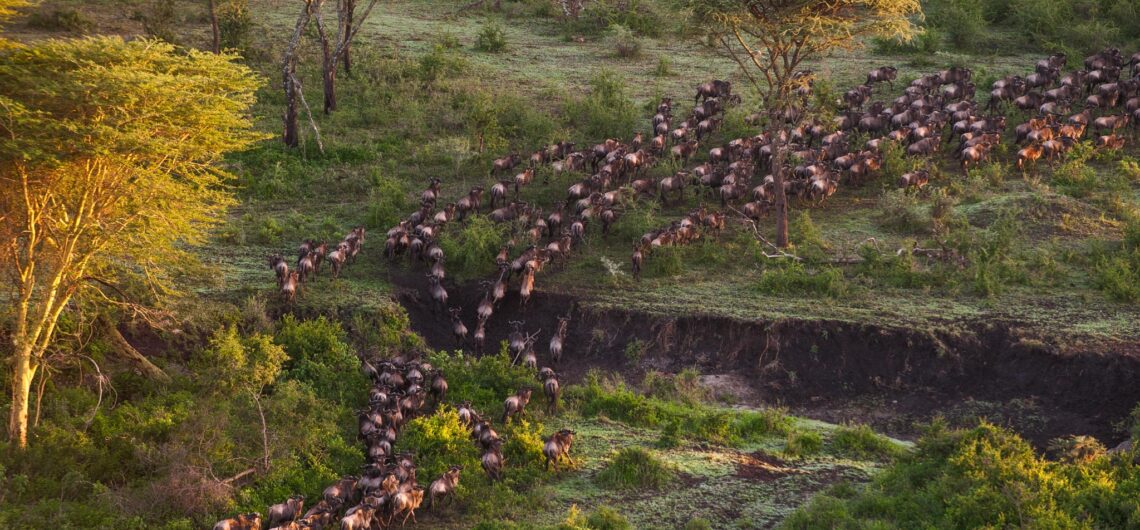
Imagine a thunderous roar shaking the earth. Millions of wildebeest charge forward in a dusty cloud, zebras and gazelles mixed in tight. This wild rush across vast plains feels like nature’s own stampede movie, raw and full of life.
The Serengeti Great Migration marks one of Africa’s top wildlife shows. It follows about 1.5 million wildebeest, plus 200,000 zebras and thousands of gazelles. They circle the Serengeti-Mara area in search of food and water. You can expect to learn the migration’s yearly loop, key spots for river jumps and baby births, and smart ways to plan your trip without hassle.
Understanding the Serengeti-Mara Ecosystem and the Migration Cycle
The Serengeti-Mara spans Tanzania and Kenya. Rain shapes this big space where animals roam free. Wildebeest lead the pack, always hunting green grass after storms.
The Perpetual Search for Grazing Land
Rainfall pulls the herds along. Fresh grass sprouts where water falls first. Over 1.5 million wildebeest depend on this green wave to stay strong.
Zebras and gazelles tag along too. They eat different parts of the grass, keeping it short for all. The whole group covers about 800 miles each year in a big loop.
This search ties into the Serengeti Mara ecosystem. Without rain’s rhythm, the cycle breaks. Animals push on, driven by hunger and survival.
The Annual Calendar: Following the Rains
Herds start in the south from January to March. That’s when babies drop on the plains. By April, they head north through central areas, dodging floods.
In June and July, they hit the Grumeti River in the west. Then, August brings them to the north near the Mara River. September sees them cross into Kenya’s Masai Mara.
Come October, rains call them south again. They loop back through the center. This wildebeest migration cycle repeats yearly, but weather can shift dates a bit.
- January-March: Southern plains for calving.
- April-May: Central Serengeti, long treks.
- June-July: Western corridor, Grumeti challenges.
- August-October: Northern Serengeti and Mara, river drama.
- November-December: Back south, short rains kick off fresh grass.
The full path hits around 1,000 kilometers round trip. Trackers use this calendar to spot herds.
Predators: The Inevitable Presence.
Lions stalk the plains, eyes on easy meals. Cheetahs dash after stragglers in open fields. Crocodiles wait in rivers, jaws ready.
These hunters follow the big crowds. More animals mean more food for them. Around tight spots like rivers, attacks spike.
One spot in the Grumeti sees lions team up on herds. It turns the migration into a tense chase. Predators keep numbers in check, part of nature’s balance.
Watch how wildebeest bunch up at danger. They snort and turn, protecting the weak. This dance of hunter and hunted adds edge to every view.
Witnessing the Iconic River Crossings: Drama on the Mara River.
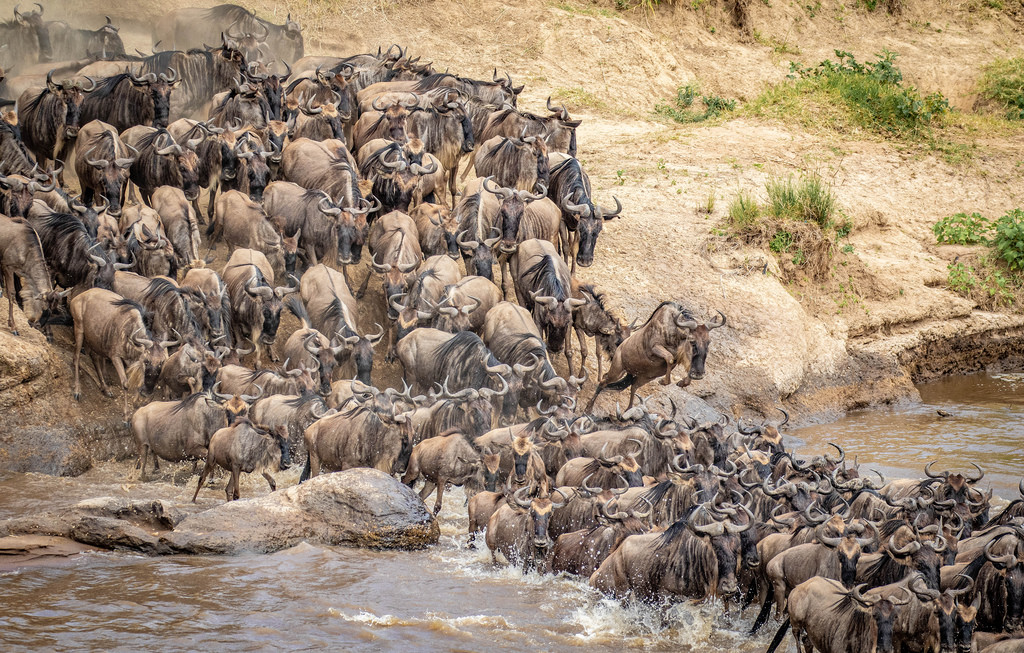
River jumps steal the show in the Serengeti Great Migration. Herds plunge into swirling waters, hearts pounding. You stand on the bank, breath held, as chaos unfolds.
Timing the Annual Mara River Assault
July kicks off the main push north. Herds gather in the northern Serengeti by late June. August peaks with daily attempts at the Mara.
Crossings last through September. Some years, dry spells delay it. Aim for mid-August for the best shot at Mara River crossing dates.
Weather plays a role too. Rains in Kenya pull them over. Once across, they graze in the lush Masai Mara till October.
Thousands try each crossing. Not all make it. This phase draws crowds for its raw power.
The Danger Lurking Beneath the Surface.
Nile crocs line the banks, up to 15 feet long. They swarm for the wildebeest feast. One snap ends a life in seconds.
Herds pace the edge, testing the flow. Panic spreads if a croc lunges early. The water turns red with the fallen.
Reports from guides show crocs eat thousands yearly. Females guard nests nearby, extra alert. It’s a brutal wait for both sides.
Think of it like a battlefield. Animals charge as one to confuse the foes. Survival hangs on split-second moves.
Prime Viewing Strategies for Crossings.
Pick spots like the Bologonja or Kogatende areas. These known points see most action. Arrive early, before dawn, to claim a good bank view.
Patience rules here. Herds may fake out, turning back ten times. Stay quiet; noise scares them off.
Upstream crossings feel safer for herds, less croc traffic. Downstream ones pack more drama, steeper banks. Hire a guide who knows the rhythm.
Bring binoculars for distant spots. A vehicle with shade helps long waits. You might see 50,000 cross in one go—pure awe.
The Vital Importance of the Calving Season
Babies flood the south in early year. This burst of life fuels the next migration loop. Plains turn into a nursery under wide skies.
Births on the Short Grass Plains (January to March)
Over 500,000 calves drop in weeks. Moms time births close together. It swamps predators with too many targets.
Short grass hides newborns less, but nutrition runs high. Rain wakes the plains green. Herds spread out, munching easy.
About 80% of calves arrive in February’s peak. Numbers ensure the group grows. It’s nature’s way to beat the odds.
One plain near Ndutu sees thousands born daily. Moms lick clean, herds circle protect. The air buzzes with new cries.
Survival Odds: The First 48 Hours
Calves stand in minutes, run in hours. Weak ones draw hyenas fast. Predators pick off the slow.
Mass births overload the hunters. Lions can’t eat them all. Still, up to 40% fall early.
Watch a calf stumble, then bolt. Moms nudge it on. This rush shapes tough survivors for the trek ahead.
Examples from rangers show cheetahs snag the lone ones. Groups stick tight, a living shield. It’s a gamble that pays off for the herd.
Exploring the Southern Serengeti and Ndutu Area
Head to Ndutu Lodge or Lake Masek Tented Camp. They sit right on calving grounds. Book early for February slots.
Drive the plains at dawn. Spot births unfold live. Guides point out lion prides nearby.
Mix game drives with walks if allowed. Feel the grass underfoot, hear the calves call. South offers calm before the north’s rush.
Pack bug spray for tsetse flies here. Layers beat morning chill. You leave with stories of life’s start.
Planning Your Serengeti Great Migration Safari: Logistics and Budget
Book smart to catch your dream scene. Costs run $500-1,000 per day, all in. Tanzania visas need planning too.
Choosing the Right Time and Location for Your Interests
Want river drama? Go north in August. Calving calls for south in January.
General views hit central in May. Western paths suit June budgets. Best time to see Serengeti migration matches your thrill.
Compare like this:
River crossings: North, July-September, high crowds.
Calving: South/Ndutu, Jan-March, baby focus.
Grazing treks: Central/West, April-July, steady action.
Pick based on weather too. Dry north means dust; wet south brings mud. Your choice sets the vibe.
Accommodation Options: Mobile Camps vs. Permanent Lodges
Mobile camps chase herds, tents pop up near action. You wake to snorts outside. Basic but close.
Permanent lodges like Four Seasons offer pools, fine food. Fixed spots mean less chase. Great for comfort seekers.
Book 12-18 months out for peak. Mobile suits adventurers; lodges fit families. Serengeti safari costs rise with luxury.
Mobile: $400-700/night, immersive.
Permanent: $800-1,500/night, amenities galore.
Tip: Mix both for a full trip.
Guides at both spots share insider routes. Choose what fits your style.
Essential Packing and Health Considerations
Yellow fever shots required; check malaria pills. Layer clothes for 50-90°F swings. Hat, sunscreen beat the sun.
Camera with zoom catches leaps. Binoculars pull in far views. Sturdy boots handle rough trails.
Water bottle, snacks for drives. No drones—rules ban them. Stay healthy to soak it all.
Conclusion: Carrying the Spectacle Home
The Serengeti Great Migration pulses with life, unpredictable and grand. It shifts with rains, never the same twice. You chase its beat for moments that stick.
Match dates to your must-see: crossings or calves. Plan early, pack right, and let guides lead. This trip changes how you see the wild.
Step into the dust cloud yourself. Book now and join the endless circle. Your story starts on those plains.
Get in Touch with our safari planner to add this to your Rwanda safari experience