
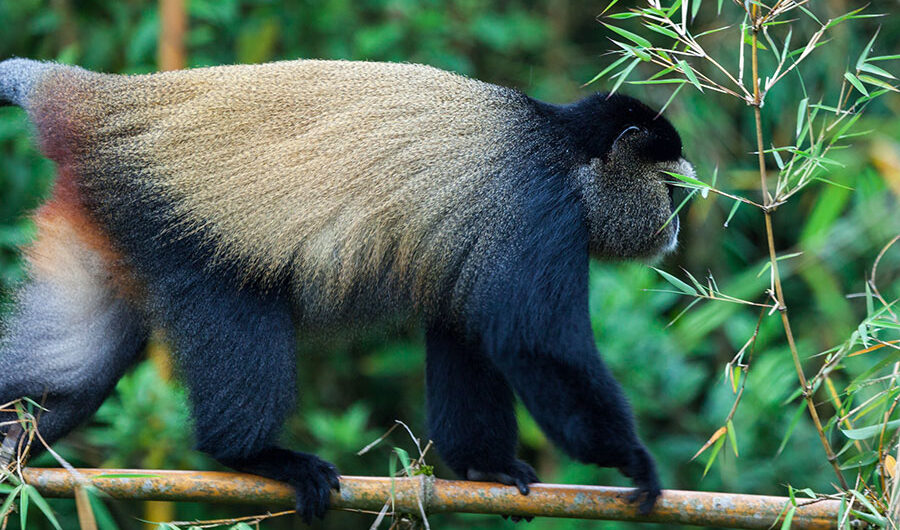
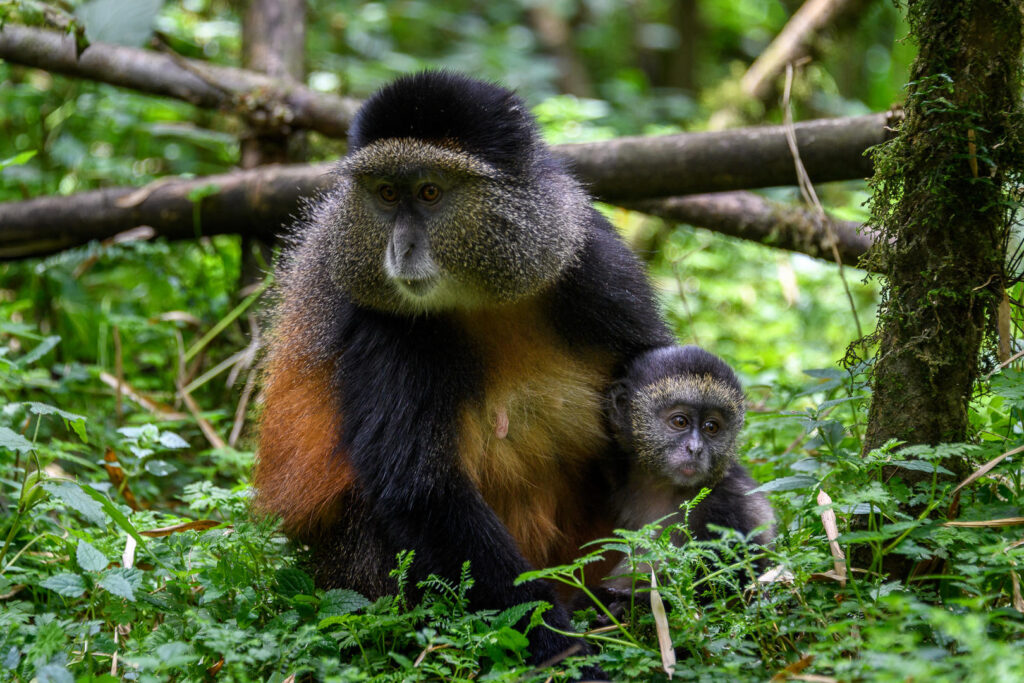
Imagine a flash of golden fur darting through misty bamboo groves—that’s the golden monkey, a rare and captivating primate with a bright orange back and a striking black face that wins hearts at first sight. These critically endangered animals, scientifically known as Cercopithecus mitis kandti, call Rwanda home, making the country one of the best places on Earth to encounter them up close.
Unlike the more demanding hikes for mountain gorillas, golden monkey trekking offers a shorter, lighter, and more playful wildlife experience, with sighting success rates of over 90% under the right conditions. Where to see golden monkeys in Rwanda is clear and well defined: Volcanoes National Park (PNV). This park is the country’s only reliable stronghold for golden monkeys, set within the dramatic Virunga Mountains. Here, visitors can plan a smooth, rewarding trek and enjoy an unforgettable encounter with these lively forest dwellers.
The Premier Location: Volcanoes National Park (PNV)
Volcanoes National Park stands out as the go-to spot for golden monkey trekking in Rwanda. Nestled in the northwest, it draws adventure seekers from around the world. Its well-kept trails and expert guides make it easier to reach than other wild areas in Africa. You won’t find these monkeys in scattered spots; PNV holds the main habituated groups. This focus helps build a safe, exciting experience for every visitor.
Geography and Ecosystem
PNV covers about 160 square kilometers in northern Rwanda, right on the Virunga Volcano chain. Towering peaks like Karisimbi reach over 4,500 meters, wrapped in lush montane forests. These high-altitude woods, full of bamboo and ferns, provide the perfect hideout for golden monkeys. They munch on leaves and fruits here, safe from lower predators.
The park lies just a two-hour drive from Kigali, Rwanda’s capital. This closeness means you can fly in and head straight to the action. Rain and fog add a mystical vibe, but the ecosystem supports year-round life for these primates. It’s a UNESCO site too, linked to nearby Congo and Uganda parks, boosting its global appeal.
Golden Monkey Population Status
Conservation work in PNV has boosted golden monkey numbers. Once down to a few hundred worldwide, Rwanda’s groups now hover around 1,000 in the wild. Local efforts, like anti-poaching patrols and habitat protection, keep them stable. The park’s two main habituated troops—Susa and Karisoke—let tourists see them without harm.
Experts track these monkeys closely, noting growth since the 1980s. Fees from treks fund ranger programs and reforestation. This success story shows how tourism aids endangered species in Rwanda. Your visit directly helps their future.
Park Entry and Permit Logistics
To enter PNV for golden monkey spotting, snag a permit from the Rwanda Development Board, or RDB. Book online via their site or through a tour operator weeks ahead—spots fill fast. As of early 2026, the permit costs $100 per person, but check for updates since rates shift.
Head to the Kinigi headquarters near the park entrance by 7 a.m. for check-in. Pay any extras like porter fees on site. Vehicles from Kigali cost about $100 round-trip, or join a group tour for ease. Armed with your permit, you’re set for the trek.
Planning Your Golden Monkey Trek: Preparation is Key
Shift your mind to the nuts and bolts now. A great golden monkey adventure in Rwanda starts with smart prep. Think about weather, what to pack, and what the hike demands. These steps turn a dream trip into reality, no matter your fitness level.
Best Time of Year to Visit
Aim for Rwanda’s dry seasons from June to September or December to February. Trails stay less muddy then, and visibility improves for monkey spotting. Rainy months, like March to May, bring slippery paths but fewer crowds and greener forests.
Golden monkeys stay active all year, so sightings aren’t seasonal. Dry times mean easier hikes and comfier days. Pack light rain gear anyway—Rwanda’s weather can surprise you. Book early for peak months to lock in your slot.
Essential Gear Checklist
Pack smart to handle PNV’s rugged terrain. Start with sturdy hiking boots that grip wet slopes. Add waterproof pants and a jacket for sudden showers.
Don’t forget a camera with a good zoom—monkeys can be shy. Toss in biodegradable bug spray, a hat, and sunscreen for sun protection. Bring at least two liters of water and energy snacks like nuts or bars. A small backpack keeps your hands free. If needed, hire a porter for $15 to carry extras.
Understanding the Trekking Duration and Difficulty
Golden monkey treks last one to three hours round-trip, shorter than gorilla hunts. But expect steep climbs and thick brush that test your legs. The elevation, starting at 2,000 meters, adds a cardio kick, so train with hill walks if you’re new to it.
Guides adjust paces for groups, making it doable for most adults. Kids over 12 join too, with family options. Viewing time caps at one hour once you find the troop. It’s less grueling than gorilla treks, but still a workout in Rwanda’s fresh air.
The Golden Monkey Trekking Experience: What to Expect on the Ground
Picture this: You arrive at dawn, heart racing with excitement. The trek unfolds like a treasure hunt in a fairy-tale forest. RDB rules keep things safe and ethical, from start to finish. Guides share fun facts along the way, turning your walk into a learning adventure.
Registration and Briefing at Kinigi Headquarters
Kick off at Kinigi, the park’s main base, around 7:30 a.m. after permit checks. Join a short briefing where staff explain safety and what to watch for. Groups max at six people, paired with a knowledgeable guide and scout.
You’ll meet your team here—porters if you hired one. The vibe buzzes with fellow trekkers sharing tips. This setup builds your confidence before the hike begins.
Following the Trackers
Trackers head out early to pinpoint monkey troops, often in bamboo zones. Your group follows a trail from the parking area, maybe 20 minutes uphill. Listen for rustles and calls as you push through ferns—the monkeys move fast.
Guides point out birds and plants en route, keeping the hike lively. Reach the site in under an hour usually. There, you’ll settle in for views of playful leaps and grooming sessions. It’s a quiet thrill, far from city noise.
Rules for Responsible Wildlife Viewing
Stay at least seven meters back from the monkeys—RDB’s firm rule. No flash photos; it scares them. Keep silent to avoid stress, and stick to the one-hour limit.
Leave no trace: Pack out all trash. If a baby approaches, don’t touch—disease risks are real. These steps protect the troops and ensure future visitors see healthy primates. Follow them, and you contribute to Rwanda’s conservation win.
Beyond the Golden Monkeys: Maximizing Your PNV Visit
Don’t stop at monkeys—PNV offers more to round out your Rwanda trip. Blend wildlife with hikes and culture for a full safari feel. These add-ons make your stay richer and support local efforts.
Combining with Mountain Gorilla Trekking
Pair golden monkeys with gorilla treks for a primate double-header. Do monkeys first; their easier hike warms you up. Gorilla permits run $1,500, but the thrill matches the cost with family encounters.
Space them over two days to recover. Many lodges near PNV cater to both. This combo gives you Rwanda’s best wildlife in one park.
Hiking the Virunga Volcanoes (e.g., Mount Bisoke or Mount Muhabura)
For bigger challenges, climb Mount Bisoke, a four-hour round-trip to a crater lake. Views of volcanoes stun at the top. Mount Muhabura takes two days, with camping for hardcore hikers.
Guides ensure safety on these paths. Permits cost $75-$150. It’s a fresh way to see PNV’s wild side beyond monkeys.
Cultural Immersion: The Gorilla Guardians Village (formerly Iby’Iwacu Cultural Village)
Wind down at Gorilla Guardians Village, a short drive from the park. Join locals for dances, drum shows, and craft demos. Learn about Batwa community life and how tourism helps them.
Tours last two hours and cost $40. Eat traditional meals like ugali. This spot ties your adventure to Rwanda’s people, making memories last.
Conclusion: Securing Your Place in Rwanda’s Primate Paradise
Seeing golden monkeys in Rwanda tops any wildlife list, with Volcanoes National Park delivering close-up magic and near-guaranteed views. From booking permits to packing gear and following rules, these steps make your trek smooth and impactful.
Plan now: Grab that RDB permit, time your visit for dry seasons, and prep for the hike. Your fees aid conservation, helping these golden gems thrive. Head to Rwanda—book your spot and join the ranks of thrilled trekkers today.