
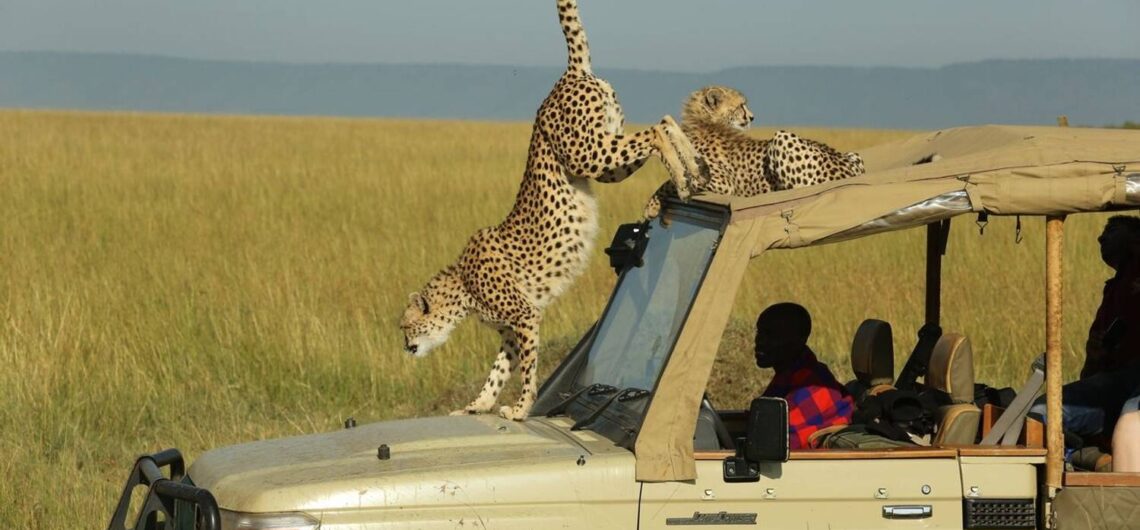
The Maasai Mara National Park is located in Narok County, Kenya, along the Great Rift Valley. Covering approximately 1,510 square kilometers, the reserve forms the northern extension of the greater Serengeti ecosystem in Tanzania, which spans about 25,000 square Kilometers. Serengeti National Park lies to the south, while Maasai pastoral communities occupy the northern and eastern borders. To the west, the reserve is bounded by the Oloololo (Siria) Escarpment.
The reserve is named after the Maasai people, who have lived in the area for centuries. In the Maasai language, the word “Mara” means “spotted”, describing the landscape dotted with acacia trees and bushes.
The Maasai Mara is part of a broader Mara ecosystem, which includes the Mara Triangle and several community-owned conservancies such as Mara North, Lemek, Olare Motorogi, Olkinyei, Siana, Koiyaki, Naboisho, and others. Three major rivers drain the reserve: the Mara River, Talek River, and Sand River. The area consists mainly of open grasslands, seasonal rivers, and acacia woodlands.
The reserve experiences two rainy seasons:
- Long rains: April to May
- Short rains: November to December
Management of the Masai Mara National Park
The eastern section of the Maasai Mara is managed by the Narok County Government, while the western section, known as the Mara Triangle, is administered by the Mara Conservancy. The surrounding conservancies are managed by elected Maasai leaders. The Mara Triangle is also the main entry point for migrating wildebeest during the Great Migration.
History of the Maasai Mara
The Maasai Mara was established as a wildlife sanctuary in 1961, initially covering 520 square kilometers, including the Mara Triangle. Later that same year, it was expanded eastward and gazetted as a game reserve, increasing its size to 1,821 square kilometres. In 1974, it was officially designated a National Reserve, though some land was returned to the local Maasai community. By 1984, the reserve had been reduced to its current size of 1,510 square kilometres.
The Maasai People
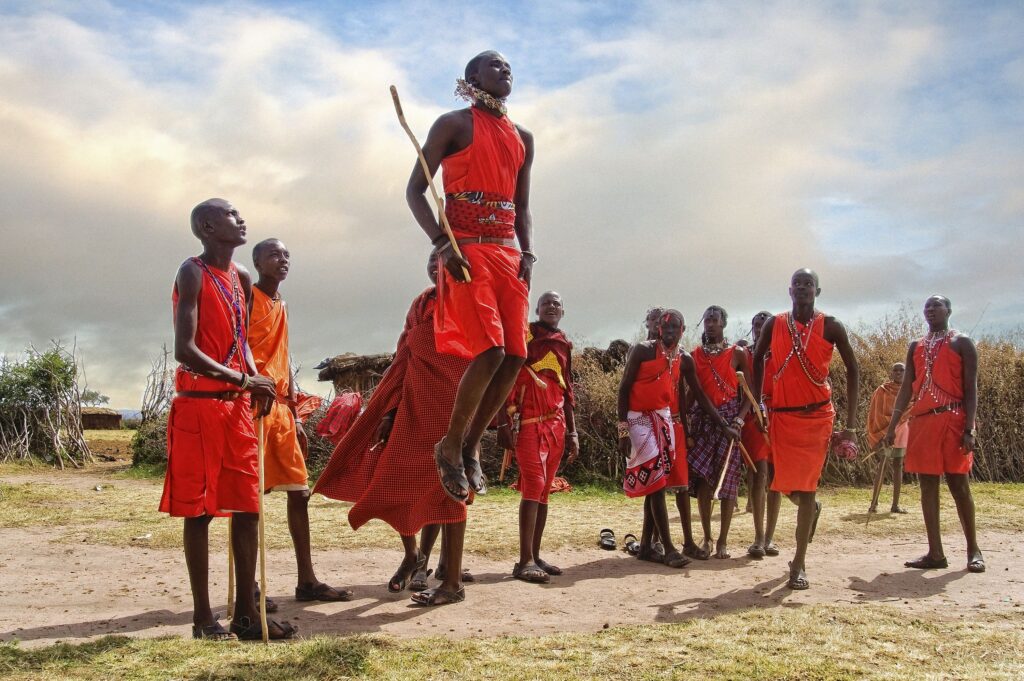
The Maasai are among Africa’s most well-known indigenous communities, found in southern Kenya and northern Tanzania. They are recognized for their tall stature, colorful shuka attire, and elaborate beadwork. Traditionally pastoralists, the Maasai depend heavily on livestock for survival and cultural identity. After early attempts to relocate them from the reserve, a decision was made to allow the Maasai to coexist with wildlife, creating one of Africa’s most iconic examples of human–wildlife harmony.
Wildlife and Tourism
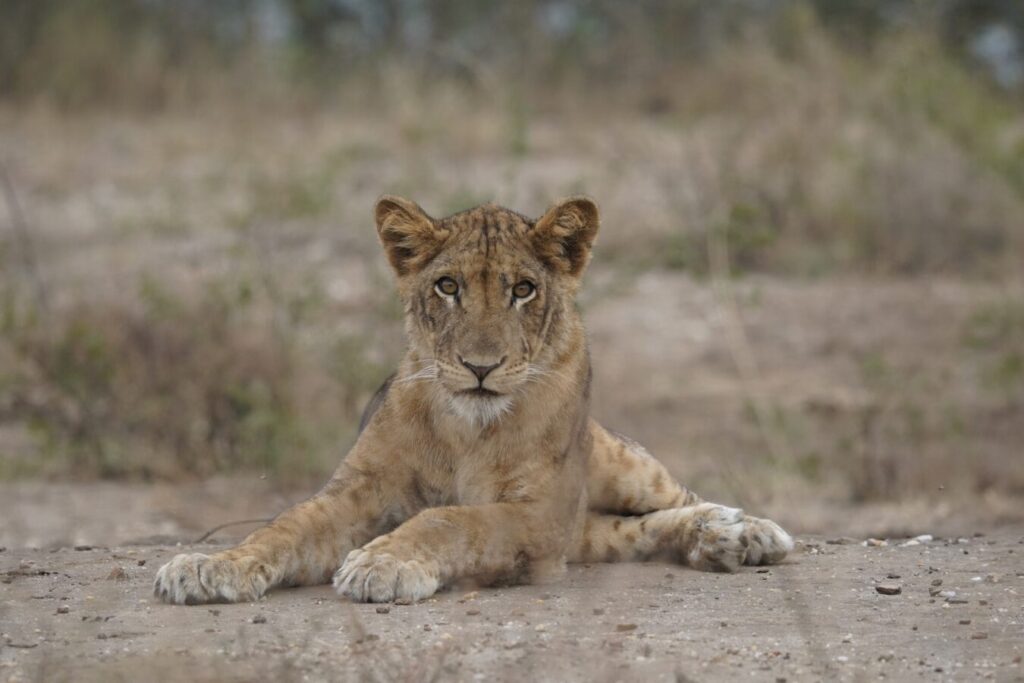
The Maasai Mara is one of Africa’s most famous wildlife destinations and is home to the Big Five: lion, leopard, elephant, buffalo, and black rhino. It is the only reserve in Kenya with an indigenous population of black rhinos. Although heavy poaching in the 1970s and 1980s drastically reduced their numbers, conservation efforts have helped stabilize the population.
The reserve also hosts a wide variety of wildlife, including giraffes, zebras, wildebeest, topi, impala, hartebeest, gazelles, hippos, crocodiles, cheetahs, hyenas, jackals, and more. Birdlife is equally impressive, with over 470 bird species, including ostriches, vultures, secretary birds, hornbills, crowned cranes, and lilac-breasted rollers.
Activities in the Maasai Mara
The main activity in the reserve is game drives, offering excellent opportunities to view wildlife year-round. Other activities include:
- Guided nature walks
- Bird watching
- Cultural visits to Maasai villages
- Hot air balloon safaris
- Photographic safaris
The Great Wildebeest Migration
The Maasai Mara is world-famous for hosting part of the Great Wildebeest Migration, one of the greatest wildlife spectacles on Earth. Between July and October, over 1.7 million wildebeest, accompanied by zebras and gazelles, migrate from the Serengeti into the Maasai Mara in search of fresh grazing. The dramatic river crossings, especially at the Mara River, offer unforgettable scenes of predator–prey interaction.
While migration season is the most popular time to visit, the reserve has abundant resident wildlife, making it an excellent year-round destination. For a quieter experience, visitors can stay in private conservancies, which allow night game drives, walking safaris, and exclusive wildlife encounters.
Conservation Challenges
Studies by the International Livestock Research Institute (ILRI) and WWF have shown a significant decline in grazing animals due to increased human settlement, livestock competition, poaching, and habitat loss. Conservation organizations, such as the Mara Elephant Project, work closely with communities to reduce human–wildlife conflict. The government also provides compensation for wildlife-related losses to residents.
Park Entry Fees
- Foreign residents (inside reserve): USD 70
- Foreign non-residents (outside reserve): USD 80
- Children: USD 40
- East African citizens: Pay reduced fees in Kenyan Shillings
Getting to the Maasai Mara
By Road
The reserve is about 3–4 hours’ drive from Nairobi, depending on road conditions and entry gate. Most visitors travel as part of an all-inclusive safari organized by a tour operator, who provides transport, a professional guide, park fees, accommodation, and activities.
By Air
Flying is the fastest and most comfortable option. Daily scheduled flights operate from Nairobi’s Wilson Airport to several airstrips within the reserve. Upon landing, guests can begin their game drive immediately. Book with us for our Masai Mara Safaris.