
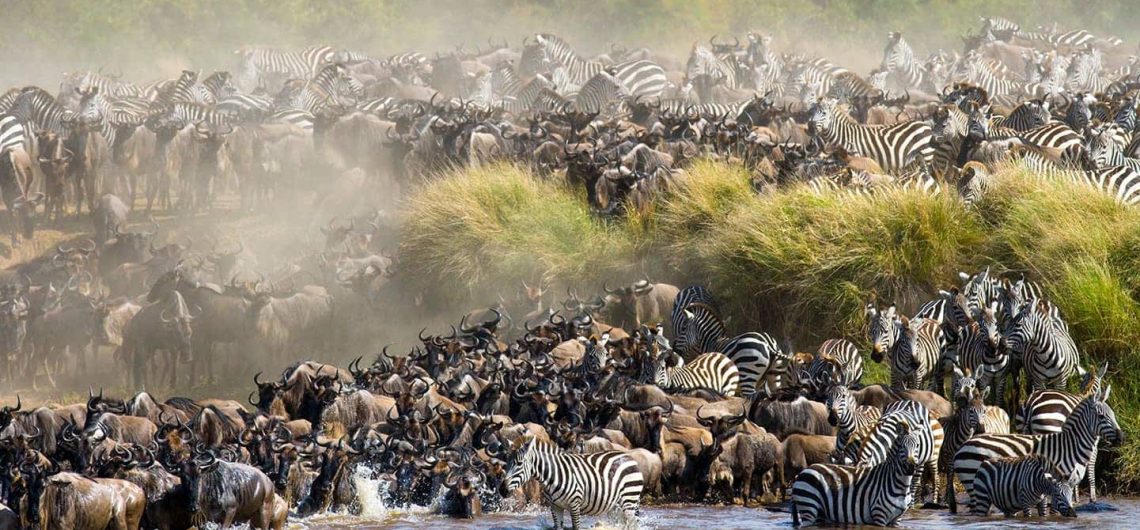
The Mara River crossings are among the most dramatic moments of the Great Wildebeest Migration, attracting wildlife enthusiasts from around the world who travel on Kenya Safaris and Tanzania Safaris. Watching thousands of wildebeest, zebra, and other animals gather along the riverbanks before plunging into the water is an unforgettable safari experience.
One of the most common questions travelers ask is: How long does a Mara River crossing last?
There is no fixed answer. An individual crossing can last anywhere from a few minutes to more than two hours, depending on the size of the herd, river conditions, weather, and the animals’ behavior. When multiple groups cross at different points throughout the day, the overall spectacle can continue for several hours or even recur over several days.
For travelers planning Kenya Wildlife Safaris, Tanzania Wildlife Safaris, or a combined East African adventure, understanding the timing and duration of the crossings can make it easier to plan a rewarding safari.
Understanding the Mara River Crossing Duration
The Mara River crossings form part of the annual Great Wildebeest Migration, when enormous herds move between Tanzania’s Serengeti ecosystem and Kenya’s Maasai Mara.
A single group may cross the river relatively quickly, sometimes taking only 15 to 30 minutes. Larger groups can take an hour or more, particularly when animals hesitate at the riverbank, encounter strong currents, or move in waves.
The crossing itself, however, is only part of the experience. Herds may gather on the riverbank for hours before committing to the water. After one group crosses, another may follow later, creating repeated Mara River crossings throughout the day.
This means a safari vehicle may spend several hours in the area waiting for the right moment. Patience is essential because there is no guaranteed schedule for when wildebeest will enter the river.
What Determines How Long a Mara River Crossing Lasts?
Several factors influence the duration of a wildebeest river crossing.
1. Herd Size
The size of the herd is one of the biggest factors. A small group may cross quickly, while thousands of wildebeest moving together can take considerably longer.
Large herds often move in waves, with animals entering the river at different times. Some may turn back before reaching the water, while others continue across immediately.
2. River Conditions
Water levels, current strength, river width, and the condition of the riverbanks can all affect the crossing.
When the river is deep or the current is strong, animals may hesitate before entering. Steep banks can also slow their movement as they climb down into the water and scramble up the opposite side.
3. Weather and Rainfall
Rainfall across the Serengeti and Maasai Mara influences river levels and animal movements. Seasonal weather conditions can therefore affect both the timing and character of the Mara River crossing.
4. Animal Behavior
The wildebeest do not cross according to a predetermined timetable. They may gather at the river, wait, scatter, and return later.
This unpredictable behavior is one reason the Great Migration river crossings are so exciting. Even when a herd is positioned near the river, there is no guarantee that it will cross immediately.
5. Predators
Crocodiles and other predators contribute to the danger of the crossing. Wildebeest must navigate not only the water but also potential predators waiting near the river.
Predator activity can influence herd movement and make crossings particularly dramatic.
How Long Should You Plan to Watch the Mara River Crossing?
Travelers should not plan their safari around the assumption that the crossing will happen at a specific hour.
Instead, allow several hours for observation. A herd could cross within minutes of arriving, or you may need to wait patiently for the animals to make their move.
For this reason, experienced safari guides are particularly valuable. They monitor animal behavior, river conditions, and recent sightings to identify promising locations while ensuring that vehicles observe the animals responsibly.
During Kenya Best Safaris and Tanzania Best Safaris, flexible schedules can provide a better opportunity to experience the migration without rushing from one location to another.
Where Can You See the Mara River Crossings?
Maasai Mara National Reserve, Kenya
The Maasai Mara is one of the most popular destinations for witnessing the northern migration and Mara River crossing.
Several sections of the river provide opportunities to observe wildebeest and zebra navigating the water. However, the exact crossing point changes depending on herd movements and river conditions.
Arriving early and remaining flexible can significantly improve the experience.
Serengeti National Park, Tanzania
The migration is a transboundary ecological phenomenon, and the northern Serengeti is an important part of the journey toward the Mara River.
Travelers on Tanzania Wildlife Safaris can explore migration areas in northern Serengeti before or after the herds move toward the river and into Kenya.
Combining the Serengeti and Maasai Mara can provide a broader understanding of the migration rather than focusing exclusively on one river crossing.
When Is the Best Time to See the Mara River Crossings?
The main Mara River crossing season generally falls between July and October, although exact timing varies from year to year.
The migration is driven by rainfall, availability of fresh grazing, and natural animal movements rather than a fixed calendar. Therefore, the precise date of a crossing cannot be guaranteed.
Travelers planning a Kenya Great Migration or Tanzania Great Migration safari should build flexibility into their itinerary. Expert local guides can provide current information about herd locations and recent crossing activity.
What Should You Expect During a Mara River Crossing?
A Great Migration river crossing is characterized by anticipation and unpredictability.
You may see thousands of wildebeest gathering along the riverbank before suddenly moving toward the water. Others may retreat at the last moment. Once the first animals enter the river, the rest of the herd may follow rapidly.
The experience can include:
- Large herds of wildebeest and zebra crossing the river
- Powerful river currents and steep riverbanks
- Crocodiles waiting in the water
- Predators taking advantage of vulnerable animals
- Dust and dramatic movement along the riverbank
- Long periods of waiting followed by sudden action
- Exceptional opportunities for wildlife photography
Because the event is unpredictable, the waiting period is an important part of the Mara River crossing experience.
Mara River Crossings and Birding Opportunities
The migration also creates interesting opportunities for travelers interested in Kenya Birding Safaris.
Riverine environments attract numerous bird species, while predators and scavengers may become more active when large numbers of animals gather near the water.
Combining migration viewing with birding allows visitors to experience the broader ecosystem rather than focusing only on the wildebeest.
Combining the Mara River Crossing With Cultural Experiences
A Great Migration safari can also be complemented by Kenya Cultural Safaris.
Visitors to the Maasai Mara may have opportunities to learn about Maasai traditions, pastoral lifestyles, community history, and the relationship between local communities and wildlife.
This combination of wildlife and cultural experiences provides a deeper perspective on the landscapes through which the migration moves.
Travelers planning longer East African itineraries can also combine Kenya Safaris, Tanzania Safaris, and Uganda Gorilla Trekking for a diverse multi-country experience.
Responsible Wildlife Viewing During the Crossing
The excitement of a wildebeest migration crossing should never come at the expense of animal welfare.
Responsible safari operators encourage visitors to:
- Maintain appropriate distances from wildlife
- Remain inside designated safari vehicles
- Avoid unnecessary noise
- Follow park regulations
- Avoid blocking animals’ routes
- Never pressure or chase animals toward the river
- Follow responsible photography practices
- Respect other visitors and wildlife-viewing guidelines
The goal is to observe the migration without interfering with the animals’ natural behavior.
How to Reach the Mara River Crossing Areas
Travelers visiting the Mara River can access the region through Kenya’s safari infrastructure, with many itineraries beginning in Nairobi before continuing by road or scheduled flight to the Maasai Mara.
For travelers combining Kenya Safaris and Tanzania Safaris, cross-border itineraries can be arranged around the Serengeti and Maasai Mara ecosystems.
Because migration movements are unpredictable, experienced safari planners can help coordinate accommodation, transportation, game drives, and time in potential crossing areas.
Why Choose Amakula African Safaris?
Amakula African Safaris helps travelers experience East Africa through carefully planned wildlife and cultural journeys. Our safari experiences include Kenya Safaris, Kenya Wildlife Safaris, Kenya Birding Safaris, Kenya Cultural Safaris, Tanzania Safaris, Tanzania Wildlife Safaris, Tanzania Cultural Safaris, and Uganda Gorilla Trekking.
For travelers hoping to witness the Mara River crossing, our approach focuses on knowledgeable guiding, responsible wildlife viewing, flexible planning, and comfortable safari experiences.
The unpredictability of the migration is part of what makes it extraordinary. Rather than promising a specific crossing time, experienced guides help guests understand animal behavior, monitor migration movements, and make the most of the available opportunities.