
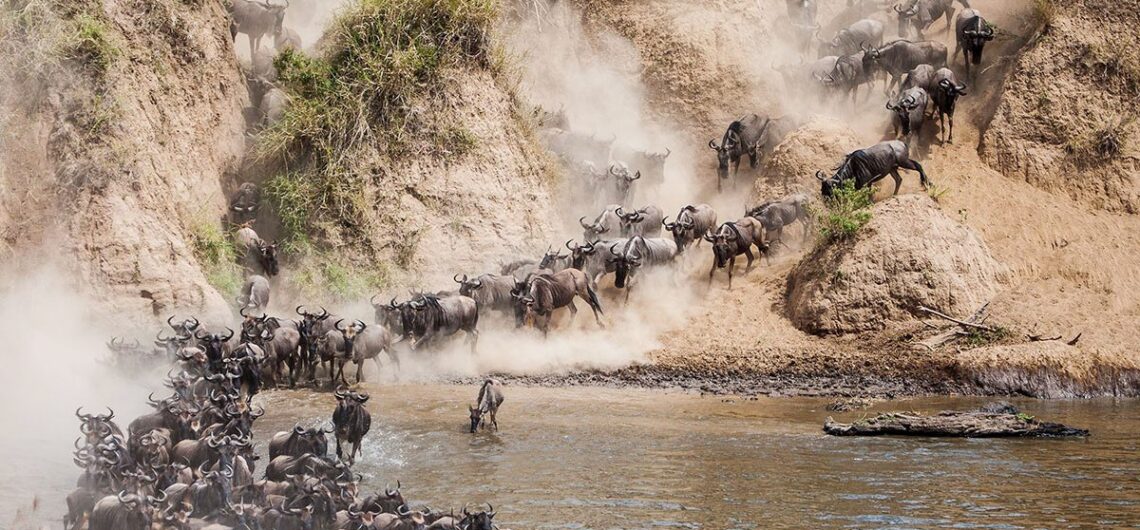
The Great Migration is Africa’s most dramatic wildlife spectacle—a powerful journey driven by survival, renewal, and the eternal rhythm of nature. Each year, nearly two million wildebeest, accompanied by vast numbers of zebras and gazelles, embark on an epic circular journey across the Serengeti–Mara ecosystem in search of fresh grazing and water.
Where the Journey Begins
The migration begins in the southern Serengeti, where life is reborn between January and March. During this period, more than half a million wildebeest calves are born within a few short weeks. For many seasoned Serengeti guides, this is a favorite season—the plains are alive with energy, and predators such as lions, cheetahs, and hyenas are constantly on the move, drawn by the abundance of vulnerable young.
Why Wildebeest Migrate
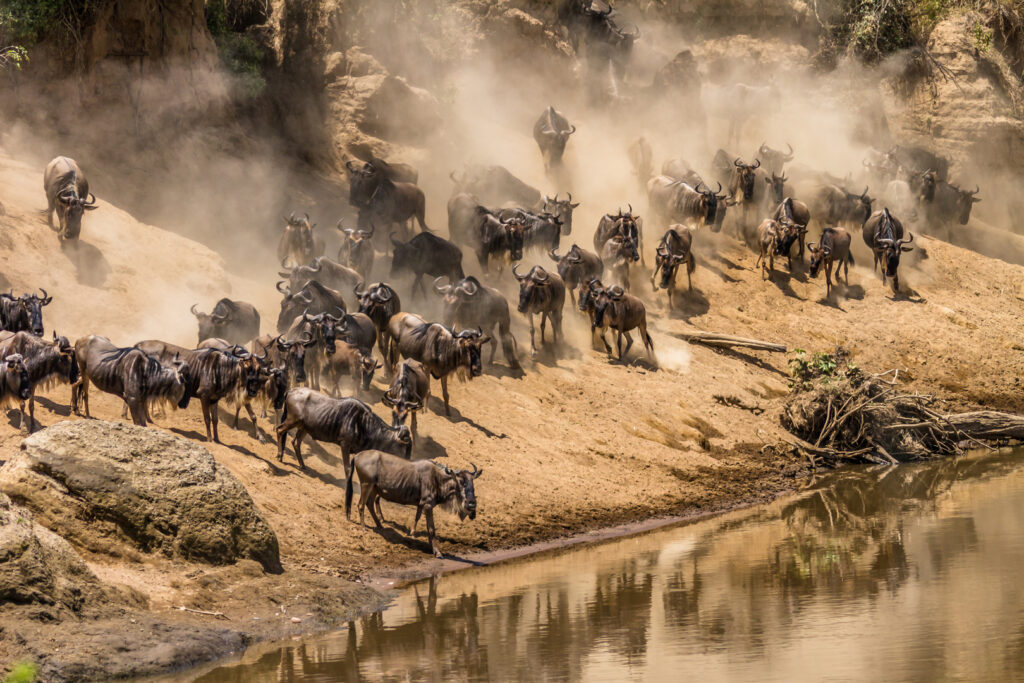
This incredible 800-kilometer trek is the largest land mammal migration on Earth. It is dictated entirely by rainfall patterns and the availability of nutritious grasses. During the wet season, the short-grass plains of the southern Serengeti offer rich grazing and safer open landscapes for calving, as predators are easier to spot. However, once these plains dry out, the herds are forced to move west and then north in search of greener pastures.
The northern reaches of the ecosystem receive the highest rainfall but produce less nutritious grass. As a result, this area serves as a dry-season refuge until the southern plains once again turn green—creating a clockwise migration cycle from south to west, north, and back south.
The Great Migration at a Glance
Few places on Earth better illustrate the circle of life. As the calves are born in the south, predators take advantage of the abundance, creating unforgettable wildlife encounters. When drought sets in around May, the herds begin their northward movement toward Kenya’s Masai Mara, grazing as they go and followed closely by zebras and gazelles.
Along the way, the migration faces immense danger. River crossings—especially at the Grumeti and Mara Rivers—are fraught with risk, with thousands of crocodiles lying in wait. Added to this are the Serengeti’s formidable lion population, the largest in Africa. Witnessing coordinated lion hunts or dramatic river crossings is among the most thrilling sights in the natural world.
By late October, the short rains trigger the herds’ return journey south. By December, they pass through central Serengeti near Seronera and head back to the calving grounds, completing the cycle.
The Great Migration: Month by Month
December – April: Calving Season
The herds gather on the southeastern Serengeti plains and Ndutu area, drawn by short rains in November and December. February marks peak calving season—arguably the best time to visit—when thousands of calves are born daily, attracting large numbers of predators. While large-scale movement is limited, vast herds are easily seen.
May – July: The Long March
As the long rains end, the herds prepare for their long journey north. This period may start anytime from late April to early June. One of nature’s most awe-inspiring sights unfolds as over a million animals move in columns stretching up to 40 kilometers. The first major challenge is the Grumeti River, where crocodile-infested waters claim many lives.
August – September: Mara River Crossings
After moving north, the herds tackle the famous Mara River crossings, often photographed as the defining moment of the Great Migration. While many animals move into Kenya’s Masai Mara, a significant portion remains on the Tanzanian side, crossing the river multiple times. This makes the northern Serengeti (Mara region) an excellent place to stay during this period.
October – November: The Return South
As the short rains begin, the herds cross back south through the Lobo and northern Serengeti areas, which are quieter and less visited. By late November, the wildebeest return to the Ndutu and southern plains, where the cycle begins once again.
Important Notes on Timing
It’s important to remember that the Great Migration follows nature’s rules, not a fixed calendar. Rainfall variations can dramatically alter movement patterns. Some years, the herds may turn back unexpectedly or delay their journey. Therefore, while general patterns exist, no sightings can ever be guaranteed.
When Is the Best Time to Visit?
The Serengeti is a year-round safari destination, offering exceptional wildlife viewing at all times. Although witnessing an exact river crossing is rare, choosing the right region at the right time greatly increases your chances of seeing large herds:
- December–May: Southern Serengeti & Ndutu
- May–July: Western Corridor
- July–October: Northern Serengeti (Mara region)
- October–November: Lobo & Northern Serengeti
Wherever you go, the Great Migration remains one of the most extraordinary wildlife events on Earth—a raw, emotional, and unforgettable display of life in motion.
Planning your next safari to East Africa to witness the Great Migration? Amakula African Safaris is ready to serve you with expertly crafted and unforgettable experiences.