
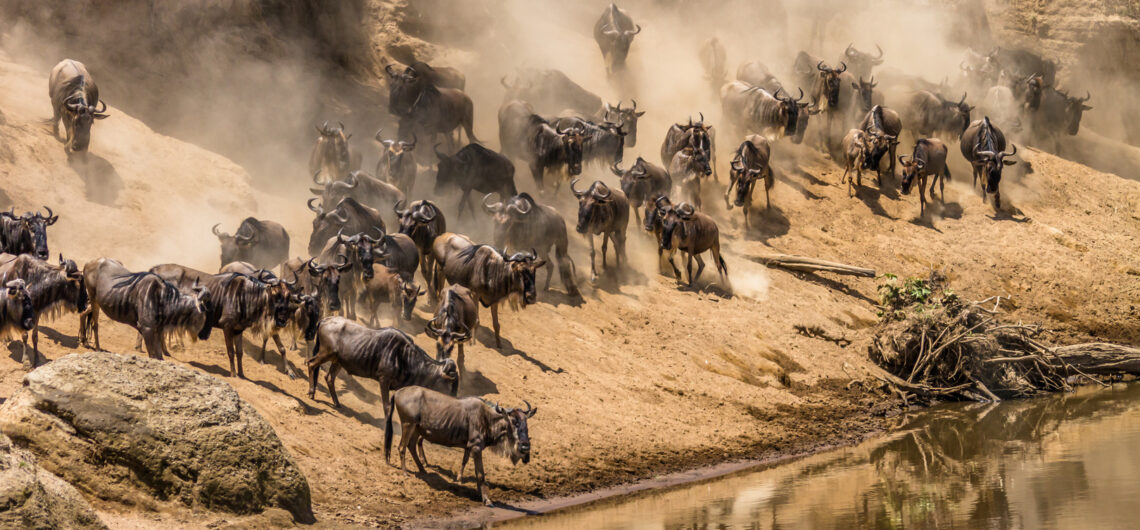
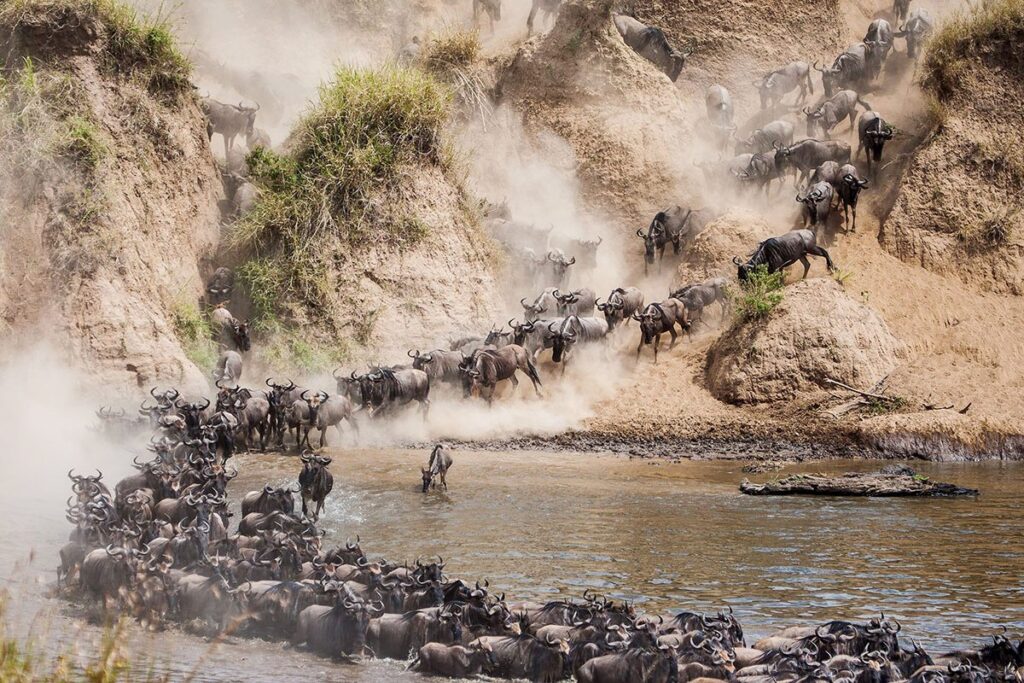
Imagine a thunderous rumble that shakes the earth. Over a million wildebeest charge across the Mara River in Kenya’s Maasai Mara National Reserve. Their hooves splash water high as Nile crocodiles lurk below. This is the great wildebeest migration in Kenya, a raw display of nature’s power that draws travelers from everywhere.
You might wonder why this event feels so alive. It stems from the animals’ need for fresh grass and water. Rains guide their path each year. In this guide, you’ll get all the details to plan your trip. We’ll cover timing, spots to see, and tips to make it unforgettable.
Understanding the Great Migration Phenomenon
What Drives Millions of Wildebeest?
Rainfall sparks the whole thing. When storms hit the Serengeti plains in Tanzania, grass sprouts fast. Wildebeest follow it north for better food. Predators like lions push them too, keeping the herd on the move.
It’s not just wildebeest. Zebras and gazelles join in, making up a massive group. Experts count about 1.5 million wildebeest, plus 200,000 zebras. Together, they form a moving blanket across the savanna. This mix boosts the ecosystem, as zebras eat tall grass first for the wildebeest.
You ask if it’s only wildebeest? No way. The combo creates a full spectacle. It answers searches like “wildebeest migration Kenya animals involved.”
The Year-Long Journey: A Circular Route
The migration never stops. It’s a loop that lasts all year. Herds start in Tanzania’s southern Serengeti after calving in January. They head north as dry spells hit.
In Kenya, they reach the Maasai Mara around July. They stay until October or November, munching on lush plains. Rains then chase them back south. This cycle repeats, driven by seasons.
Picture it like a river of life flowing back and forth. The Kenyan part shines with river drama. If you search “wildebeest migration Kenya timeline,” this nails it.
Apex Predators: The Spectacle’s Supporting Cast
Lions roar from the bushes, eyeing the herd. Cheetahs sprint for young stragglers. Hyenas laugh as they scavenge. These hunters make the wildebeest migration Kenya trips exciting.
Crocodiles wait in the Mara River. They snap at crossing wildebeest, adding tension. Without predators, the plains would overcrowd. They keep balance in this wild show.
You get more than just animals. It’s a food chain in action. Spots like the Mara let you see it all up close.
Timing Your Kenyan Migration Safari: When to Go for Maximum Impact
Peak Season: July to September – The River Crossings
July kicks off the best time. Herds pile up near the Mara River. They plunge in, dodging crocs for greener fields. This is the heart of the wildebeest migration in Kenya.
Expect chaos and beauty. Thousands cross daily, but it depends on rains. Guides track the action. Book flights and stays 9 to 12 months ahead. Crowds fill up fast.
Why this window? It’s when drama peaks. Your chances of seeing crossings hit high. It’s worth the hustle for that view.
Shoulder Seasons: October to November – The Buildup
By October, herds spread out. Crossings slow, but plains teem with life. Zebras graze beside wildebeest in the Mara Triangle. Rains build up, hinting at southward shifts.
You avoid peak crowds. Game viewing stays strong. Historical data shows rains often start mid-October, moving herds. It’s a calmer way to see the wildebeest migration Kenya end.
Bring patience. Smaller groups wander, but the vibe feels intimate. Perfect if you like fewer people around.
Low Season Considerations: Dry Spells and Smaller Herds
January to June brings quiet. Main herds stay in Tanzania for calving. But the Mara has residents like elephants and birds. Costs drop, making it budget-friendly.
Calving happens mostly south, yet some action spills over. Dry weather means animals cluster at water. You spot leopards easier in sparse bush. It’s not the full wildebeest migration Kenya rush, but solid value.
Think of it as off-season perks. Lodges offer deals. You learn the area without the boom.
Navigating Kenya: Best Locations Within the Maasai Mara
The Maasai Mara National Reserve: Central Hotspots
The reserve spans vast plains. Enter from Talek Gate for quick access. Guides head to river bends like the famous “crossing point” near Musiara Marsh. Here, herds gather before jumping in.
You need sharp eyes or a pro driver. Roads get bumpy, but views reward you. This spot maximizes wildebeest migration Kenya sightings. Stay alert; action unfolds fast.
It’s the core for big numbers. Combine drives with walks for deeper feels.
The Mara Triangle: Premium Viewing Territory
Head west to the Mara Triangle. This part, run by conservancies, has smoother paths. Fewer vehicles mean better photos. Herds cross the Mara River here too.
Sunsets paint the hills gold. You spot hippos in calm waters. It’s premium for quality over quantity in your wildebeest migration Kenya adventure.
Locals manage it well. That keeps wildlife thriving. A top pick for relaxed safaris.
Conservancies Adjacent to the Main Reserve
Private spots like Mara North border the park. They allow off-road drives and night outings. No crowds; just you and the herd. Olare Motorogi offers similar perks with lion prides nearby.
Spend days in the reserve for masses, nights in conservancies for peace. Cultural chats with Maasai happen here. It’s exclusive access to the wildebeest migration Kenya edges.
Balance keeps your trip fresh. Fees add up, but the extras shine.
Essential Logistics for a Migration Safari
Choosing Accommodation: Camps vs. Lodges
Tented camps move with herds. They pop up near rivers in season. Feel the wild close, with campfires at night. Budget options start at $200 per night.
Lodges offer steady comfort. Think pools and Wi-Fi in stone buildings. They cost more, from $400 up. Pick based on your style for the wildebeest migration Kenya.
Camps suit adventurers. Lodges fit families. Both get you near the action.
Permit Costs and Park Fees
Kenya charges for entry. Adults pay about $80 daily in high season. Kids get half. Conservancies tack on $75 or so per person.
Budget $100 to $150 total per day. Fees fund rangers and roads. Check updates; prices shift with rules.
Plan ahead. It covers your wildebeest migration Kenya access smooth.
Packing Essentials for Migration Viewing
Layer clothes for cool mornings. Pack fleece jackets and hats. Binoculars zoom in on distant crossings. A camera with long lens catches splashes.
Wear khaki tones to blend. Sunscreen and bug spray guard against burns and bites. Water bottles keep you hydrated on drives.
Don’t forget snacks. Long days need energy. Neutral gear won’t spook animals.
Beyond the River: Maximizing Your Kenyan Wildlife Experience
Cultural Encounters with the Maasai People
Visit Maasai villages through guided tours. Learn beadwork and cattle herding. They share stories around fires. Respect keeps it real; ask before photos.
These ties aid conservation. Communities fight poaching with tourism cash. It’s more than wildlife in your wildebeest migration Kenya trip.
Feel the human side. It rounds out the safari.
The Big Five Checklist in the Mara
Spot lions easy during migration. They hunt the herds. Elephants roam plains in family groups. Buffalo mass near rivers.
Leopards hide tough, but guides find them. Rhinos are rarest here. The Mara packs high density. Tally them on drives.
It’s a bonus to the main event. Your list grows fast.
Sustainable Tourism and Ethical Viewing
Stay back from crossings. Let animals move free. No litter; pack it out. Choose operators who follow rules.
Tourism brings $50 million yearly to Kenya locals. It supports jobs and parks. Be part of the good.
Your choices matter. Keep the wildebeest migration Kenya thriving.
Conclusion: Securing Your Place in the Spectacle
The wildebeest migration in Kenya peaks July to September with river thrills. But the Maasai Mara delivers year-round magic. Time it right for crossings that stun.
Mix the main reserve’s crowds with conservancy calm. You’ll get numbers and intimacy. Start planning now; spots fill quick.
Book that safari. Witness the herd’s rhythm. It’s a trip you’ll chase in memories forever.