
20-Days Of Kenya Birding Photography Tour
Tour overview
20-Days of Kenya birding photography tour. Our Kenya Birding Photography Tour, is a 20-day journey through East Africa’s most iconic birding and wildlife destinations. This expertly guided nature tour is crafted for passionate birdwatchers, nature lovers, and wildlife photographers seeking an immersive experience in Kenya’s diverse ecosystems.
From the vibrant wetlands of Lake Victoria to the highland forests of Mount Kenya and the sweeping plains of the Masai Mara, this safari covers an impressive range of habitats. Over the course of this tour, you will encounter more than 500 species of birds, including East African endemics, migratory species, and sought-after rarities.
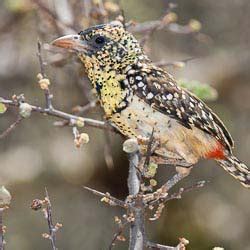
Spotted Morning Thrush perched on a tree during an Amakula African Safaris Kenya Birding Photography Tour in Samburu Reserve.
In addition to the avian wonders, enjoy thrilling encounters with Kenya’s famous wildlife. Expect to photograph Big Cats, Elephants, Rhinos, and the towering Masai Giraffes. With the guidance of our experienced birding and photography experts, you will capture stunning images while deepening your appreciation of Kenya’s natural beauty.
This Kenya Birding and Nature Tour promises not only incredible birding but also a commitment to conservation and responsible tourism. By joining this expedition, you are directly contributing to efforts that protect Kenya’s birds and wildlife habitats for future generations.
| Day | Activity |
| Day 1: | Arrival in Nairobi |
| Day 2: | Tour in Nairobi National Park |
| Day 3: | Tour to Naivasha and Kinangop Plateau |
| Day 4: | Birding Journey to Masai Mara |
| Day 5: | Birding and Photography on the Masai Mara Plains |
| Day 6: | Continuing the Conservation Journey |
| Day 7: | Exploring Kisumu and Birding Expedition to Kakamega Forest Reserve |
| Day 8: | Birding and Photography Extravaganza in Kakamega Forest |
| Day 9: | From Kakamega To Lake Baringo |
| Day 10: | Exploring the Avian Splendor of Lake Baringo |
| Day 11: | Exploring Nyahururu’s Birding Adventure and Marmanet Forest |
| Day 12: | Birding Photo Safari to Samburu National Park |
| Day 13: | Full-Day Birding Photography in Buffalo Springs Reserve |
| Day 14: | Transfer To Samburu Reserve |
| Day 15: | Birdwatching Adventure to Nyeri |
| Day 16: | Exploring Aberdare National Park |
| Day 17&18: | Birding Adventure on Mount Kenya |
| Day 19: | Birding Through the Mwea Irrigation Scheme |
| Day 20: | Departure |
Detailed itinerary
Day 1: Arrival in Nairobi
Upon your arrival in Nairobi, we will greet you and get started. Depending on your arrival time, we head straight to Nairobi National Park. This unique wildlife sanctuary sits right next to the city.
Despite its urban setting, the park offers incredible birding opportunities. It is home to wetlands, thickets, and grasslands. The famous thorn trees provide shelter to many birds. Here, you will enjoy your first East African nature tour experience.
The excitement does not stop with birds. Nairobi National Park is also home to many mammals. You may spot the White and Black Rhinoceros. You can also see Thomson’s and Grant’s Gazelles, African Lions, Leopards, and the tall Masai Giraffe.
By the end of today, you will already have an impressive bird list and wonderful photographs to treasure.
Day 2: Tour in Nairobi National Park
Today, we return to Nairobi National Park. The early morning light is perfect for bird photography. We will explore both familiar trails and new routes.
Our key targets include the Hartlaub’s Turaco, Yellow-necked Spurfowl, and Wattled Starling. With luck, we will also spot the Lesser Honeyguide. Every species offers something special for birdwatchers and photographers.
We often encounter the Green-capped Eremomela (Eremomela scotops kikuyuensis). Another target is the Highland Rush Warbler. With patience and good light, you will have many photo opportunities today.
Day 3: Tour to Naivasha and Kinangop Plateau
After breakfast, we leave Nairobi behind. Today, we travel towards Naivasha. Our first stop is the Kinangop Plateau, a high-elevation area known for birding.
This grassland habitat is home to many special birds. Our top target today is the Sharpe’s Longclaw. We will also search for the beautiful Golden-breasted Sunbird. In addition, we hope to spot the Yellow-crowned Canary and the colorful Cinnamon-chested Bee-eater.
More Bird Species to Watch For on Day Three
As we explore, we listen for the call of Hunter’s Cisticola. We also search for the Striped Crake, often hiding in dense grass. Groups of Quailfinches may cross our path.
With some luck, we may see the Long-tailed Widowbird (Euplectes progne delamerei) performing its display flight. Finally, for the keenest birders, there is a chance of spotting the secretive Striped Flufftail.
Day 4: Birding Journey to Masai Mara
This morning, we begin an exciting journey toward the Masai Mara Wildlife Reserve. As we travel, the scenery transforms. We cross vast open plains and dramatic escarpments. Along the way, we make stops to enjoy the birdlife that thrives here.
The Whistling Thorn Acacias dot the landscape. These iconic trees are a magnet for many birds. We pause to search for localized species. Look for the White-bellied Canary, often perched high and singing. Overhead, you may spot the majestic African Goshawk soaring gracefully.
As we continue, we search for more treasures. Watch for the delicate Pale White-eye and the graceful Grey-headed Silverbill. Flocks of Swahili Sparrows and Northern Grey-headed Sparrows add energy to the scene.
Each bird we encounter offers a glimpse into Kenya’s unique ecosystems. By day’s end, we arrive at the Masai Mara, ready for the adventures that await.
Day 5: Birding and Photography on the Masai Mara Plains
Today, we explore the Masai Mara National Reserve, one of the world’s most famous wildlife destinations. Our focus is on its rich birdlife. We travel along tracks that wind through open plains, acacia woodlands, and riverbanks.
As we head toward the Mara River and the Tanzania border, we search for the elusive Schalow’s Turaco. This striking bird is a true gem of East African birdlife. Nearby, we may find the regional endemic Rufous-tailed Weaver, busy at its intricately woven nest.
Be sure to watch for the Rosy-throated Longclaw, its brilliant colors standing out against the grass. The Long-tailed Cisticola often sings from tall grasses, providing a beautiful soundtrack for the day.
Along the plains, we also look for the Yellow-throated Sandgrouse, the Black-winged Lapwing, and the aerial displays of the Mosque Swallow and Rufous-chested Swallow.
Above us, the skies are alive with raptors. We may spot the imposing Lappet-faced Vulture or the graceful African Marsh Harrier. On the ground, the Masai Ostrich struts proudly, while the small Kittlitz’s Plover scampers along riverbanks in search of food.
Day 6: Continuing the Conservation Journey
Today, we spend our final morning in the Masai Mara. We take time to search for species we may have missed. Our guides will help us track down elusive birds like the Usambiro Barbet, a local subspecies closely related to the D’Arnaud’s Barbet.
After this morning’s birding, we begin our journey toward Kisumu. Along the way, we remain alert for new sightings. Be sure to have your binoculars ready! We watch for the Southern Grosbeak Canary and the elusive Mountain Grey Woodpecker. Both add unique sightings to our growing species list.
Upon arrival in Kisumu, we explore the papyrus swamps and the lake shores. This area is part of the Lake Victoria Basin biome, home to several localized species. Our targets include the Papyrus Yellow Warbler, Papyrus Canary, and the stunning Papyrus Gonolek.
We also search for the Carruthers Cisticola, often heard before seen. With luck, we will have a high species count by the end of the day. This is a key destination on our Kenya Birding Photography Tour, offering excellent opportunities to photograph birds in unique wetland habitats.
Day 7: Exploring Kisumu and Birding Expedition to Kakamega Forest Reserve
We begin our day at dawn, the prime time for bird activity. In the humid surroundings of Kisumu, we explore the marshes along Lake Victoria. This area is part of the unique Lake Victoria Basin biome. Here, we encounter species that we will not see anywhere else on our tour.
With keen eyes and ears, we listen for the calls of elusive birds. We hope to spot the White-winged Swamp Warbler, the bold Eastern Plantain-eater, and the dazzling Red-chested Sunbird. We also search for a variety of weavers. These include the Slender-billed, Golden-backed, Northern Brown-throated, Holub’s Golden, and Black-headed Weavers.
In addition, the Black-headed Gonolek and the charming Yellow-fronted Tinkerbird often make appearances. Watch for the elaborate displays of Winding Cisticolas and the lively Woodland Kingfisher. The calls of the African Reed Warbler and Greater Swamp Warbler create a rich soundscape.
Later in the day, we head to Kakamega Forest Reserve. This lush forest is a haven for birdwatchers. It is home to rare species endemic to the Guinea-Congo forest biome.
As we explore Kakamega’s dense foliage, we prepare for an unforgettable day of birdwatching. This forest is not only a birding hotspot but also a vital sanctuary for endangered species. By visiting Kakamega, we support ongoing conservation efforts aimed at preserving its rich biodiversity.
Day 8: Birding and Photography Extravaganza in Kakamega Forest
Today, we immerse ourselves in the wonders of Kakamega Forest. Our Kenya Birding Photography Tour offers two full days of birding in this biodiversity hotspot.
We search for the elusive Grey-chested Babbler (Kakamega poliothorax) and the diurnal Red-chested Owlet. As we wander through the forest’s green undergrowth, we watch for Turner’s Eremomela, Yellow-bellied Wattle-eye, and Chapin’s Flycatcher.
The colorful Blue-headed Bee-eater and melodious Joyful Greenbul are key targets today. Listen for the calls of the Grey-throated Barbet as we explore deeper into the forest.
We hope to see the Orange-tufted Sunbird and the majestic African Crowned Eagle soaring above the canopy. Other exciting species include the Purple-throated Cuckoo-shrike, Blue-shouldered Robin-chat, and Dusky-crested Flycatcher.
We will also search for Black-collared Apalis, Uganda Woodland Warbler, and Southern Hyliota. Among the treetops, we may glimpse the Green-throated and Olive-bellied Sunbirds, their colors flashing in the light.
Day 9: From Kakamega To Lake Baringo
Today, we travel from the forests of Kakamega to the scenic shores of Lake Baringo. As we move across ponds, wheat fields, and escarpments, we remain alert for birdlife. Our Kenya Nature Tour continues with more exciting sightings.
After breakfast, we set out toward Lake Baringo, eager to explore its rich avian habitats. As we descend the Keiyo Escarpment, we scan the woods for several key species. We hope to spot the Boran Cisticola, Ross’s Turaco, White-crested Turaco, and the elusive Little Rock-thrush.
We make a special stop to search for Red-billed Buffalo-weaver and White-billed Buffalo-weaver. These birds are distinctive and full of character.
Upon arrival at our lodge near Lake Baringo, we take time to relax and enjoy the tranquil setting. In the afternoon, we explore the lodge grounds, cameras at the ready. Likely sightings include the Black-throated Barbet, Northern Brownbul, and Eastern Violet-backed Sunbird.
Day 10: Exploring the Avian Splendor of Lake Baringo
We begin our day with a peaceful boat ride on Lake Baringo. This allows us to reach remote cliffs and hidden coves teeming with birdlife. As we glide along the water, we watch for the elusive Brown-tailed Rock Chat and the striking Chestnut Weaver.
Along the shoreline, we may spot Hemprich’s Hornbill, Jackson’s Hornbill, Northern Red-billed Hornbill, and African Grey Hornbill. Each species offers exciting photography opportunities.
Later, we venture into the nearby dry woods and thickets. Here, we search for brilliant Shining Sunbirds, Beautiful Sunbirds, and Hunter’s Sunbirds. The delicate Amethyst Sunbird and shy Grey Wren-Warbler are also possible sightings.
We keep watch for raptors such as the African Hawk-eagle and Lanner Falcon. Flocks of Bristle-crowned Starlingsand Magpie Starlings add to the spectacle.
Additional highlights include the Mouse-colored Penduline Tit, Somali Tit, Black Cuckoo-shrike, and Madagascar Bee-eater. With luck, we may see the massive Goliath Heron wading along the lake’s edge.
Night Birds of Lake Baringo
Our day ends with a search for nocturnal species. Guided by experts, we hope to find the Northern White-faced Owl, Slender-tailed Nightjar, and African Scops Owl. We may also encounter the Spotted Eagle Owl, Greyish Eagle Owl, and Heuglin’s Courser.
Day 11: Exploring Nyahururu’s Birding Adventure and Marmanet Forest
We start the day at first light with a nourishing breakfast. Then, we head out to the cliffs near Lake Baringo for a final morning birding session. Armed with binoculars and cameras, we scan the rocky outcrops in search of species we may have missed.
Key targets include the colorful Red-and-Yellow Barbet and the tiny but striking Pygmy Batis. Every sighting adds excitement to our Kenya Birding Photography Tour and enriches our species list.
Transfer to Nyahururu
After our morning birding, we pack our luggage and bid farewell to the peaceful shores of Lake Baringo. We then begin our journey to Nyahururu. Along the way, we enjoy the scenic beauty of Kenya’s countryside. Rolling hills, verdant landscapes, and traditional farms provide a beautiful backdrop for the trip.
Exploring Marmanet Forest
On arrival at our resort in Nyahururu, we enjoy a well-deserved lunch. In the afternoon, we explore Marmanet Forest, a pristine and lesser-visited birding hotspot.
Here, we search for species like the elusive African Hill Babbler, the melodious Cinnamon Bracken Warbler, and the charming Mustached Tinkerbird. With luck, we may also spot the rare and colorful Abyssinian Crimsonwing, a highlight for any birdwatcher.
Day 12: Birding Photo Safari to Samburu National Park
This morning, we leave Nyahururu behind and journey toward Samburu National Park. The route is picturesque, with rolling hills and scenic valleys that make the drive an enjoyable part of our Kenya Nature Tour.
Depending on our timing, we enjoy lunch in Nanyuki, a charming town along the way. Alternatively, we may proceed directly to Samburu and enjoy a warm meal upon arrival.
Birdwatching in Buffalo Springs
In the afternoon, we dive straight into birdwatching in Buffalo Springs. This area boasts diverse birdlife and rich habitats. Our targets include the vibrant Golden Pipit, the elusive Somali Courser, and the striking Chestnut-headed Sparrow-lark.
We keep our binoculars ready for the Chestnut-bellied Sandgrouse, colorful Somali Bee-eater, and charming Black-bellied Sunbird. The varied landscapes of Buffalo Springs offer endless opportunities for bird photography.
Day 13: Full-Day Birding Photography in Buffalo Springs Reserve
After an early breakfast, we set off for a full day of birding in Buffalo Springs Reserve. This day promises a deep dive into one of Kenya’s most rewarding birding areas.
We explore grasslands, woodlands, and riverine habitats. Some of our sought-after species include the elusive Fire-fronted Bishop, striking Foxy Lark, and the rare Pink-breasted Lark.
Other highlights include the Scissor-tailed Kite, Pale Prinia, and the colorful Yellow-vented Eremomela. These species are often seen flitting among the acacias and thickets.
The habitats in Buffalo Springs Reserve are remarkably diverse. We scan the open plains for the elusive Rosy-patched Bushshrike (Telophorus cruentus hilgerti). In the denser thickets, we look for the secretive Bare-eyed Thrush.
Every corner of Buffalo Springs holds a new discovery, making this a highlight of our Kenya Birding Photography Tour.
Day 14: Transfer To Samburu Reserve
We start with an early breakfast before entering Samburu Reserve through Archer’s Post Gate. This reserve offers an excellent opportunity to immerse ourselves in the natural beauty of Kenya’s dry northern regions.
As we traverse the reserve, our expert guides take us to the best birding locations. We hope to see the Northern Grosbeak Canary, the elegant Steel Blue Whydah, and the tiny Somali Crombec.
Raptors such as the Tawny Eagle and Wahlberg’s Eagle are often seen soaring overhead. On the ground, we may spot the impressive Buff-crested Bustard and the sharp-eyed Eastern Chanting Goshawk.
More Birding Highlights in Samburu
African Scops Owl resting in Lake Baringo, Kenya, during an Avian Safaris birding photography tour.
African Scops Owl perfectly camouflaged at Lake Baringo on an Avian Safaris Kenya birding and photography adventure.
Throughout the day, we continue our search for rare and localized species. The elusive Stone Partridge may be found hidden among rocky outcrops. Above the savannah, we watch for the graceful Straw-tailed Whydah.
In the foliage, we keep an eye out for flashes of color. Key sightings may include the Golden-breasted Starling and Fischer’s Starling, both prized for their brilliant plumage.
Day 15: Birdwatching Adventure to Nyeri
After breakfast, we bid farewell to the captivating landscapes of Samburu Reserve. Today, we journey toward Nyeri, the gateway to the stunning Aberdare Mountains. With memories of Samburu’s birdlife still fresh, we look forward to discovering new species in these highland forests.
As we travel through the picturesque countryside, the views are breathtaking. Rolling hills, lush valleys, and deep escarpments create a beautiful backdrop. Along the way, we keep our eyes open for bird species that frequent these farmlands and forest edges.
Our excitement builds as we approach Nyeri. The Aberdare Mountains are home to a variety of unique habitats, including montane forests and alpine moorlands. These support many rare and endemic bird species, promising exciting discoveries on this leg of our Kenya Nature Tour.
Day 16: Exploring Aberdare National Park
Today, we explore Aberdare National Park, home to a rich variety of birdlife. We travel by vehicle, stopping at prime birding spots along the way. The roadsides offer excellent views of Jackson’s Francolin, Scaly Francolin, and the high-elevation Moorland Chat.
As we ascend towards the moorland zone, we search for the Aberdare Cisticola, a local specialty. Other highlights include the elegant Slender-billed Starling and the colorful Red-throated Wryneck.
We also hope to spot the elusive Brown Woodland Warbler and White-eared Barbet. Each sighting presents a fantastic opportunity for bird photography and nature appreciation.
Days 17&18: Birding Adventure on Mount Kenya
For the next two days, we explore the rich bird habitats of Mount Kenya. Morning birding excursions take us along forest roads, where we search for highland specialties. Key species include Abbott’s Starling, Kenrick’s Starling, Black-fronted Bush-shrike, and Fine-banded Woodpecker.
We also hope to spot the colorful Red-fronted Parrot and the elusive Rufous-breasted Sparrowhawk. In the undergrowth, we listen for Ruppell’s Robin-chat and search for Abyssinian Crimsonwing and Kandt’s Waxbill.
After a productive morning, we return to our accommodations for a rest and a hearty lunch. This time allows us to recharge and reflect on the morning’s birding highlights.
In the late afternoon, we resume our birdwatching activities. As the light softens, we search for the elusive Olive Ibis. We also listen for the haunting calls of the Montane Nightjar, adding an enchanting close to each day on Mount Kenya.
Day 19: Birding Through the Mwea Irrigation Scheme
Today, we begin our return journey to Nairobi. Along the way, we stop at the Mwea Irrigation Scheme, a productive wetland area. Here, we hope to spot Lesser Moorhen, Allen’s Gallinule, and the bright Yellow-crowned Bishop.
A highlight of the day is the chance to see the elusive and endemic Hinde’s Babbler, a species found only in this region. This final birding stop adds a fitting conclusion to our Kenya Birding Photography Tour.
Day 20: Departure
Includes:
- Ground transfer between destinations
- Accommodation as per the itinerary
- Park entrance fees
- Activity fees
- Meals as mention in the Itinerary
- Drinking water
Excludes;
- International flight
- Visa
- Travel Insurance
- Extras at the lodge(laundry, drinks, etc)
- Tipping
Why Choose Amakula African Safaris?
Amakula African Safaris specializes in Kenya Safaris, Kenya Wildlife Safaris, Kenya Cultural Safaris, Kenya Birding Safaris, Tanzania Safaris, Tanzania Wildlife Safaris, Tanzania Great Migration tours, and Uganda Gorilla Trekking.
For travelers interested in hiking and camping, the team can help determine whether camping, tented accommodation, or lodges are most suitable for the chosen destination and itinerary.
Top Selling Africa Safari Holidays in 2027/2028
- 14 days Kenya & Uganda wildlife and Gorilla tracking safari
- 3 Days Uganda Gorilla Trekking & Wildlife Experience
- 14 Days Best Of Uganda Big 5 safari with Primates & Tree
- 5-Day Best Gorilla Trekking Safari In Uganda
- 7-Day Murchison Falls, Chimp Tracking & Gorilla Trekking
- 3-Days safari to Murchison Falls National Park
- 15-Day Gorilla Safari And Wildlife In Uganda
- 12-Day Rwanda and Uganda Gorilla Luxury Tour
- 14 DAYS UGANDA –RWANDA GORILLA EXPERIENCE
- 21 Days Rwanda, Congo And Uganda Gorilla Experience
- 21 Days Rwanda, Congo And Uganda Gorilla Experience Safari
- 10-Days Uganda And Rwanda Wildlife And Primate Safari
- 16 Days best of African safari to Rwanda and Uganda
- 4-Day Gorillas and Golden Monkeys Safari
- 3-Days Uganda mountain gorilla trekking safari
- 15-Day gorilla safari and wildlife in Uganda
- 6-Day Rwanda and Uganda Bwindi gorilla experience safari
- 14 Days|13 Nights Best of Uganda and Rwanda wildlife
- 3-Day Murchison Falls National Park and Ziwa Rhino sanctuary
- 15 Days-Gorilla Safari and Wildlife in Uganda
- 10 Days-Best of Uganda Ideal Primate tour
- 10 Days-Gorillas and Chimpanzees wildlife Uganda
- 10 Days-Uganda Gorilla Safari, Chimpanzee and Wildlife
- 8 Days-Best of Uganda Safaris with Gorillas
- 7 Days-Queen Elizabeth Gorillas Trekking In Bwindi and Lake
- 7 Days- Around Lake Mburo National Park
- 5-Days-Exciting Primates Adventure Safari in Uganda