
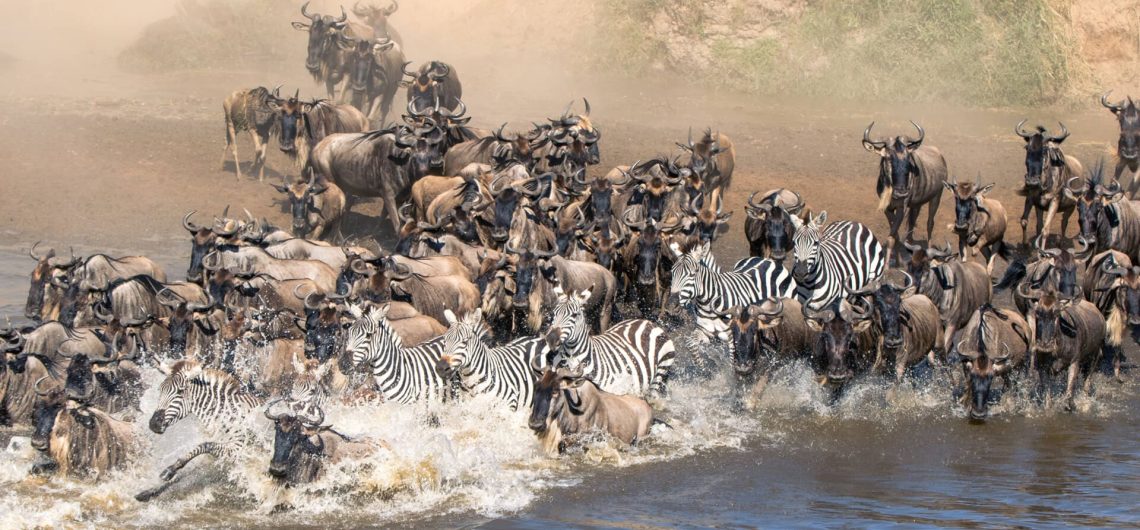
Great Wildebeest Migration in Kenya & Tanzania: Choose the Right Safari Season
Great Wildebeest Migration In Kenya & Tanzania: Choose the Right Safari Season. More than 1.5 million wildebeest cross the Serengeti-Mara system each year, joined by hundreds of thousands of zebra and gazelle. They follow fresh grass and water across northern Tanzania and southwestern Kenya, while lions, cheetahs, hyenas, crocodiles, and other predators wait nearby.
The Great Wildebeest Migration is a year-round cycle, not one fixed event. Rainfall, grass growth, river levels, and herd behavior can shift the route by days or weeks. Your best safari depends on your goal: calving in Tanzania, river crossings in Kenya or northern Tanzania, lower-season value, family-friendly travel, or quieter wildlife viewing. No responsible operator can promise an exact crossing date.
Follow the Year-Round Great Wildebeest Migration Route
Understand what moves and why
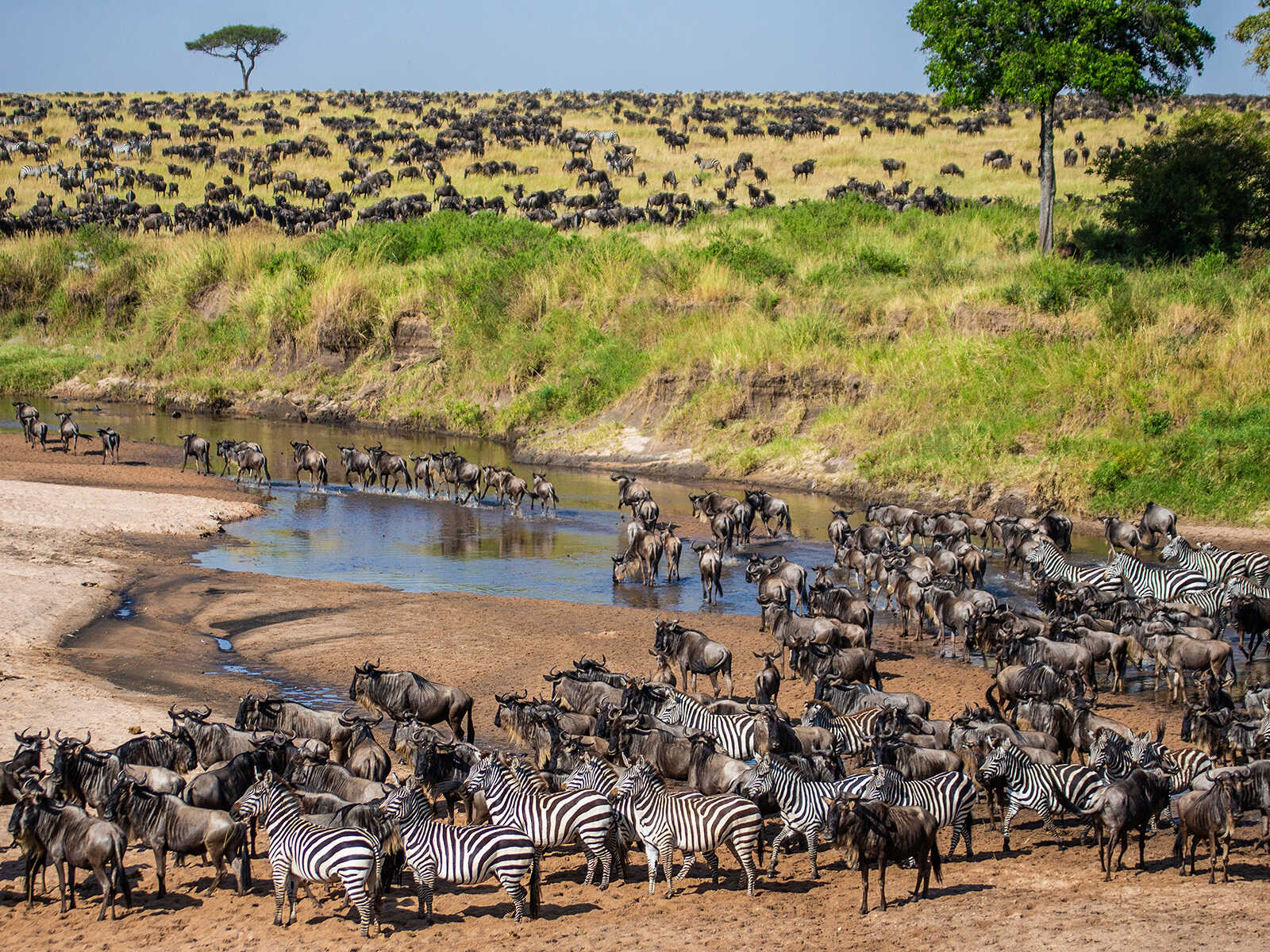
The main herds include about 1.5 million wildebeest, plus large numbers of zebra and gazelle. Estimates vary by survey method, but the scale remains immense. The animals move when rain produces short, nutritious grass and when water becomes available.
Predators track the herds but never appear on demand. Lions, cheetahs, leopards, spotted hyenas, and Nile crocodiles may all benefit from the movement. Tanzania National Parks Authority (TANAPA), Kenya Wildlife Service (KWS), and ecological studies of the Serengeti-Mara system provide the main conservation framework.
See how herds shift between Tanzania and Kenya
Calving usually begins on the southern Serengeti plains and around Ndutu from January through March. Herds then move west and north through the Serengeti, with some reaching the Grumeti region before entering northern Tanzania and Kenya’s Masai Mara.
The route is broad rather than exact. Different groups can occupy different regions at the same time, so a regional plan works better than a promise to find one giant herd in one place.
Know what makes migration viewing different
The Serengeti and Masai Mara offer excellent resident wildlife viewing all year. Migration season adds dust, sound, movement, predator activity, and the chance to watch animals gather at rivers.
It doesn’t replace good safari planning. Guide skill, camp location, vehicle rules, resident species, and the number of nights in each area still shape your experience.
Choose the Best Great Wildebeest Migration Season
Watch calving in the southern Serengeti
January through March is the main calving period, with February often bringing the highest number of births. Herds gather on open plains, where newborn animals attract predators and create intense viewing.
Book early, especially for Ndutu camps. Choose guides who know the seasonal plains and follow rules around young animals. Some camps have fewer visitors than northern river-crossing areas, though popular calving sites can still be busy.
Follow the western and northern movement
Between May and July, herds often move through the central and western Serengeti toward northern grazing areas. Grumeti River crossings may occur before Mara River crossings, but neither is guaranteed.
Stay several nights in one region. A camp that combines central or western Serengeti access with northern Tanzania gives you more room to respond to herd movements.
Wait for possible Mara River crossings
July through October is the usual period for crossings in the northern Serengeti and Masai Mara. Rain, river height, crocodiles, herd buildup, steep banks, and animal hesitation all affect the timing. Herds may gather for hours, cross quickly, or turn back.
Avoid operators who pressure animals or crowd the riverbank. Vehicles should keep legal distances and follow designated viewing rules.
Track the return south
Short rains often draw herds back toward eastern and southern Serengeti plains between October and December. November and December can bring green grass, active resident wildlife, and different visitor patterns.
| Month | Likely region | Main appeal | Typical conditions |
|---|---|---|---|
| January | Southern Serengeti | Herd buildup | Green plains; moderate crowds |
| February | Ndutu and south | Peak calving | Warm; high booking demand |
| March | Southern Serengeti | Calves and predators | Rain can shift movement |
| April | Central Serengeti | Green scenery | Wet season; fewer visitors |
| May | Western Serengeti | Movement begins north | Rain and muddy roads |
| June | Western/central Serengeti | Grumeti area | Drier; rising demand |
| July | Northern Serengeti/Mara | Possible crossings | Cool mornings; busy |
| August | Mara and north | Crossing chances | Dry; peak demand |
| September | Mara and north | Crossings and predators | Dry; high prices |
| October | North and east | Late crossings, return | Variable rain |
| November | Eastern Serengeti | Fresh grass | Short rains; greener plains |
| December | South and east | Herd return | Festive-season demand |
These are seasonal patterns, not guarantees.
Compare Kenya and Tanzania for Your Safari
Choose Kenya for Mara access
The Masai Mara National Reserve offers open grasslands, strong resident wildlife, and easier access to northern herds during the right months. Nearby private conservancies may provide specialist guides, walking, and night drives where local rules permit.
Check whether your camp sits inside the reserve or in a neighboring conservancy. Reserve congestion can be heavy near famous crossing points, while conservancy stays may cost more because of conservation fees and added services.
Choose Tanzania for scale and choice
The Serengeti covers several distinct safari areas: southern plains, central Seronera, the western corridor, and northern Serengeti. The Ngorongoro Conservation Area adds a separate wildlife setting nearby.
Tanzania suits travelers who want longer routes, private or mobile camps, and the ability to follow different migration stages. Trade-offs include long drives, seasonal road conditions, park fees, and the need to choose the right Serengeti region for your month.
Decide whether to combine both countries
A Kenya-Tanzania safari can pair the Masai Mara with the Serengeti and cover more migration regions. It also adds border procedures, visa checks, vehicle changes, small-aircraft luggage limits, and extra transfers.
For many travelers, more nights in one country produce better value than constant movement. Choose a cross-border plan only when its wider coverage outweighs the added logistics.
Build an Itinerary That Protects Wildlife Time
Stay longer in the right region
Several nights in one area give you more chances to see herd movement, predator behavior, and river activity. Daily camp changes create long transfers and reduce time outside the vehicle.
A calving trip might focus on southern Serengeti and Ngorongoro. A crossing-focused trip could combine northern Serengeti with the Mara. A broader route may add Tarangire, central Serengeti, and several nights in the north.
Match camps, flights, and gear to the route
Permanent lodges offer comfort and fixed facilities. Seasonal or mobile camps can sit closer to moving herds but may provide fewer services. Private conservancy camps often add walking and night drives.
Ask for the camp’s exact seasonal location, guide experience, included park fees, transfer times, and cancellation terms. Road travel offers flexible stops and changing scenery, while internal flights save time but bring luggage limits and fewer schedules. Confirm aircraft type, baggage weight, airstrip transfers, and delay plans.
Pack neutral clothing, layers, sun protection, binoculars, insect repellent, spare batteries, a power bank, dust protection, and a reusable bottle. For photography, use a fast shutter speed, carry a longer lens, protect equipment from dust, and never block another guest’s view for a picture.
Travel Safely and Responsibly
Select operators with clear standards
Look for licensed guides, transparent park and conservation fees, local staff, community partnerships, waste controls, and rules against chasing animals. Check recent reviews and ask how guides respond when vehicles gather at a sighting.
Review current guidance from KWS, TANAPA, the Ngorongoro Conservation Area Authority, and reputable conservation groups before travel.
Prepare for rivers, illness, and weather
Stay inside the vehicle unless your guide gives clear permission. Never approach a riverbank on foot, shout at animals, or demand that a guide move closer. Strong currents, steep banks, crocodiles, and panicked animals make crossings dangerous.
Arrange travel insurance with emergency evacuation cover. Ask a qualified travel-health professional about malaria prevention, vaccines, hydration, and sun exposure. Check current passport, visa, yellow-fever, customs, and health rules through official government or embassy sources.
Support people and habitats
Community conservancies can fund habitat protection and local jobs when payments are handled openly. Ask how tourism revenue reaches nearby communities, and choose cultural visits arranged with consent.
Use refillable bottles, reduce plastic, conserve water, tip fairly, and avoid captive-animal encounters or staged wildlife contact.
Budget and Book With Clear Expectations
 Compare the full safari cost
Prices change with season, accommodation, park fees, flights, road transfers, guide exclusivity, single supplements, visas, insurance, meals, drinks, vaccinations, and tips. Request an itemized quote that separates included and excluded costs.
Compare nights in the correct migration region, not only the daily price. A cheaper trip may spend too little time near the herds.
Reserve peak dates early
February calving trips, July through October crossing trips, school holidays, and small mobile camps often sell out first. Confirm dates, camp location, transfer plans, guide arrangements, minimum stays, luggage limits, cancellation terms, and emergency procedures.
No operator can guarantee a crossing, predator sighting, herd location, or clear weather. A successful safari can include grazing herds, zebra movement, resident wildlife, changing plains, and skilled interpretation when animals do something unexpected.
Great Wildebeest Migration Questions Answered
What is the best month to see the migration?
February is often best for calving. July through October offers the strongest chance of northern movement and possible river crossings. November and December can bring green scenery and the return south, but rain may change the schedule.
Is Kenya or Tanzania better?
Kenya offers accessible Mara viewing and conservancy stays. Tanzania provides a larger range of migration regions and more ways to match camp location with the season. The better choice depends on your dates, budget, trip length, and preferred style.
Can a river crossing be guaranteed?
No. Herds may wait, turn around, cross elsewhere, or move before your arrival. Improve your odds by staying several nights, choosing the correct region, using experienced guides, and keeping your plans flexible.
How many days do you need?
A focused trip needs multiple nights in one migration area. A Kenya-Tanzania itinerary needs more time because border travel and flights consume hours. Families should favor private vehicles, child-friendly camps, shorter transfers, and clear malaria and age policies.
Conclusion
The Great Wildebeest Migration in Kenya and Tanzania follows rain, grass, water, and animal behavior rather than a fixed calendar. Choose southern Serengeti for calving, western and northern Tanzania for herd movement, or the Mara and northern Serengeti for possible river crossings.
Select the region before booking the camp. Stay long enough for nature to change, check current travel rules, and choose operators that protect animals and support nearby communities. Pick your desired experience, match it with the likely season, build in flexibility, and treat every migration sighting as a privilege rather than a guarantee.
Why Choose Amakula African Safaris?
Amakula African Safaris specializes in Kenya Safaris, Kenya Wildlife Safaris, Kenya Cultural Safaris, Kenya Birding Safaris, Tanzania Safaris, Tanzania Wildlife Safaris, Tanzania Great Migration tours, and Uganda Gorilla Trekking.
For travelers interested in hiking and camping, the team can help determine whether camping, tented accommodation, or lodges are most suitable for the chosen destination and itinerary.
Top Selling Africa Safari Holidays in 2027/2028
- 14 days Kenya & Uganda wildlife and Gorilla tracking safari
- 3 Days Uganda Gorilla Trekking & Wildlife Experience
- 14 Days Best Of Uganda Big 5 safari with Primates & Tree
- 5-Day Best Gorilla Trekking Safari In Uganda
- 7-Day Murchison Falls, Chimp Tracking & Gorilla Trekking
- 3-Days safari to Murchison Falls National Park
- 15-Day Gorilla Safari And Wildlife In Uganda
- 12-Day Rwanda and Uganda Gorilla Luxury Tour
- 14 DAYS UGANDA –RWANDA GORILLA EXPERIENCE
- 21 Days Rwanda, Congo And Uganda Gorilla Experience
- 21 Days Rwanda, Congo And Uganda Gorilla Experience Safari
- 10-Days Uganda And Rwanda Wildlife And Primate Safari
- 16 Days best of African safari to Rwanda and Uganda
- 4-Day Gorillas and Golden Monkeys Safari
- 3-Days Uganda mountain gorilla trekking safari
- 15-Day gorilla safari and wildlife in Uganda
- 6-Day Rwanda and Uganda Bwindi gorilla experience safari
- 14 Days|13 Nights Best of Uganda and Rwanda wildlife
- 3-Day Murchison Falls National Park and Ziwa Rhino sanctuary
- 15 Days-Gorilla Safari and Wildlife in Uganda
- 10 Days-Best of Uganda Ideal Primate tour
- 10 Days-Gorillas and Chimpanzees wildlife Uganda
- 10 Days-Uganda Gorilla Safari, Chimpanzee and Wildlife
- 8 Days-Best of Uganda Safaris with Gorillas
- 7 Days-Queen Elizabeth Gorillas Trekking In Bwindi and Lake
- 7 Days- Around Lake Mburo National Park
- 5-Days-Exciting Primates Adventure Safari in Uganda